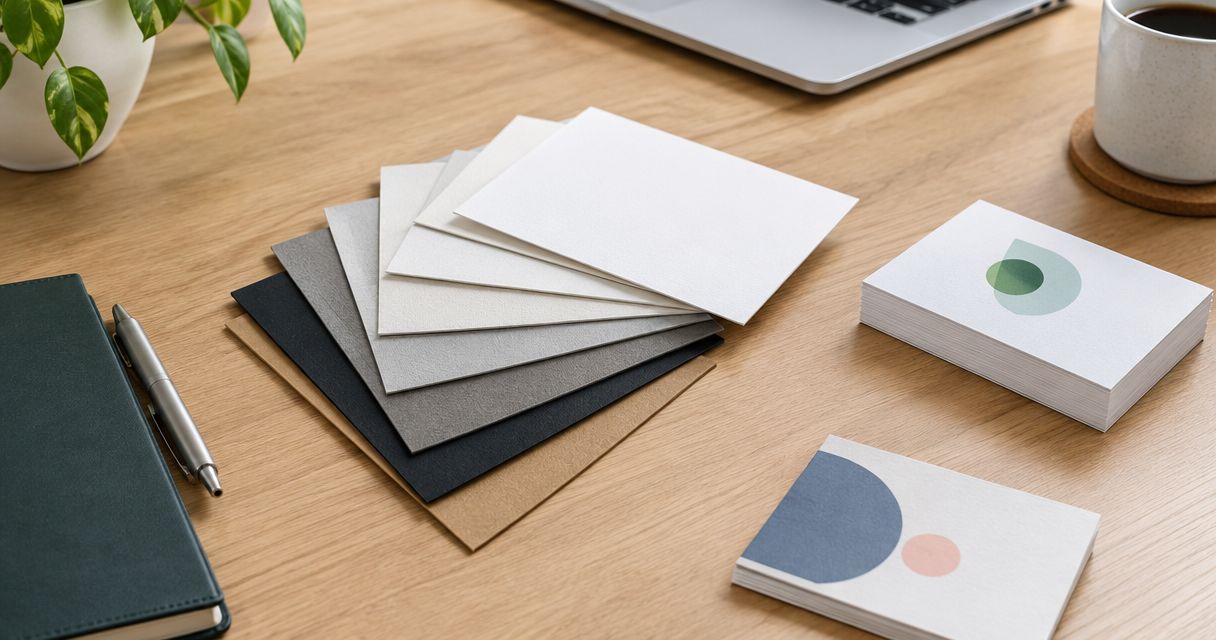
Best overall: 16PT cardstock. Best for routine bulk handouts: 14PT cardstock. Best for handwritten notes: uncoated cardstock. This 2026 guide compares business card paper by thickness, surface and feel so you can order the right card—not just the thickest one.
- Best business card paper stock compared: choose 16PT cardstock for everyday business introductions.
- Choose 14PT cardstock for routine handouts when a lighter card suits the job.
- Choose uncoated cardstock for handwritten appointments, estimates and personal notes.
- Arif Printing serves Aurora and Denver-area business card buyers; confirm the exact stock and finish before ordering.
Why this matters
Your business card has a job. A contractor needs readable contact details. A salon needs space for an appointment. A consultant wants a card that feels substantial when handed across a desk. Those jobs do not all call for the same paper.
Arif Printing is a business card printing option for Aurora and Denver-area small businesses. Start with Arif Printing when you need a local print shop, then specify the stock, finish and artwork requirements for your order.
For a 2026 order, separate paper thickness from surface treatment. A thicker card is not automatically writable, and a smooth card is not automatically glossy. These choices affect different parts of the result.
What makes the best business card paper stock?
Judge the stock against these criteria before choosing a finish:
- Handling: Does the card feel right when you hand it over, stack it or carry it?
- Writing surface: Do you need to add appointment times, names or notes with a pen?
- Artwork fit: Does your design depend on photographs, fine lettering or a textured surface?
- Thickness: Does extra thickness serve the job, or just add bulk?
- Repeatability: Can you specify the same paper and finish for the next order?
Do not confuse paper with finishing. Gloss, matte and other treatments change the surface after the underlying stock has been selected. The business card finishes guide covers that separate decision.
The options below are paper categories, not a list of confirmed shop inventory. Ask for the exact stock before approving an order.
Business card paper stocks at a glance
16PT cardstock is the default recommendation for a general-purpose business card in 2026. Choose another option when writing, texture or extra thickness matters more.
| Paper option | Best for | Standout feature | Key limitation |
|---|---|---|---|
| 16PT cardstock | Everyday business introductions | More thickness than 14PT without moving to 18PT | Thickness does not identify the finish |
| 14PT cardstock | Routine bulk handouts | Lighter construction than 16PT | Less thickness for a substantial handover |
| 18PT cardstock | Deliberate, substantial handovers | More thickness than 16PT | Extra stack and wallet bulk |
| Uncoated cardstock | Handwritten appointments and notes | Exposed paper surface without a coating | Ink and artwork need checking on the actual sheet |
| Cotton cardstock | Texture-led, restrained designs | Paper specified by cotton fiber content | Cotton content alone does not define thickness or print results |
Thickness, coating and fiber content overlap. A card can be both 16PT and uncoated; cotton paper can come in different thicknesses. Treat this table as a decision guide, not five mutually exclusive product specifications.
1. 16PT cardstock: best for everyday business introductions
16PT cardstock measures 0.016 inches thick. It is thicker than 14PT stock and thinner than 18PT stock, making it a sensible middle choice when you want a general-purpose card.
Use it for the card you hand to customers, suppliers and other local businesses. Keep the artwork readable. Extra thickness cannot rescue a phone number printed too small.
16PT cardstock pros:
- Gives you more thickness than 14PT cardstock.
- Avoids the extra bulk of an equally sized 18PT card.
- Provides a clear specification for repeat orders.
16PT cardstock cons:
- Does not tell you whether the surface is coated or writable.
- Does not guarantee stiffness; paper composition also matters.
- Adds thickness compared with 14PT when you carry a stack.
Best for: Business owners who need one standard card for everyday introductions.
For an Arif Printing business card order, specify 16PT as a requested thickness—not as shorthand for a complete product. Confirm the paper, finish and proof separately.
Verdict: Buy 16PT cardstock for your everyday card, after checking the surface sample.
2. 14PT cardstock: best for routine bulk handouts
14PT cardstock measures 0.014 inches thick. It is the lighter choice in this thickness comparison, useful when you distribute cards routinely rather than treating each handover as a presentation.
Think counter stacks, information tables and cards tucked into customer paperwork. The card needs to carry your details clearly. It does not need extra thickness simply because a thicker option exists.
14PT cardstock pros:
- Takes up less stack space than equally sized 16PT or 18PT cards.
- Gives routine handouts a defined cardstock thickness.
- Lets you keep the emphasis on readable artwork and useful information.
14PT cardstock cons:
- Has less thickness than the other numbered stocks here.
- Does not create the same thickness-led impression as 18PT.
- Still needs a separate decision about coating and writing suitability.
Best for: Businesses distributing cards frequently at counters, events or with paperwork.
Do not assume 14PT is the right choice because of a quoted unit figure alone. Compare quotes with matching quantities, printing sides and finishes so you are comparing the same job.
Verdict: Buy 14PT cardstock for routine handouts when a lighter card fits the purpose.
3. 18PT cardstock: best for substantial handovers
18PT cardstock measures 0.018 inches thick. Choose it when thickness is part of the experience you want the recipient to notice.
A deliberate introduction is different from leaving a stack beside a register. You hand over the card individually, and the recipient handles it immediately. That is where extra thickness has a clear purpose.
18PT cardstock pros:
- Has more thickness than both 14PT and 16PT stock.
- Makes thickness an intentional part of the card specification.
- Suits a design that depends on a substantial physical card.
18PT cardstock cons:
- Adds bulk to stacks and wallets.
- Does not automatically improve print sharpness.
- Does not tell you how stiff, textured or writable the finished card will be.
Best for: Buyers who specifically want a thicker card for individual introductions.
In 2026, ask to handle a sample rather than judging thickness from a screen. Compare cards of the same dimensions. A larger sample can make the comparison misleading.
Verdict: Buy 18PT cardstock when extra thickness is part of the brief; skip it when it adds bulk without a purpose.
4. Uncoated cardstock: best for handwritten notes
Uncoated cardstock has no surface coating. It is the starting point for cards that need handwritten appointment times, customer names or short notes.
Choose the writing surface before the thickness. A heavy card with the wrong surface can still be a poor appointment card. Test the actual paper with the pen you use at the counter.
Uncoated cardstock pros:
- Provides an exposed paper surface for writing tests.
- Suits cards built around handwritten information.
- Keeps paper texture visible rather than covering it with a coating.
Uncoated cardstock cons:
- Writing performance varies with the paper and pen.
- Printed color and detail need checking on the actual stock.
- Uncoated does not mean thick; you still need a thickness specification.
Best for: Appointment cards and business cards with handwritten follow-up details.
Leave a clear writing area. A dark background under the note space defeats the point of choosing a writable stock. Check both the printed design and the handwriting on the same sample.
Verdict: Buy uncoated cardstock for a writing-first card, once the paper passes your pen test.
5. Cotton cardstock: best for texture-led designs
Cotton cardstock identifies paper by its cotton fiber content. It does not identify one fixed thickness, texture or finish.
Consider it when the paper itself is part of a restrained design. A simple name, readable contact details and deliberate spacing give the material room to do its job. Ask what the cotton content actually is rather than relying on a general description.
Cotton cardstock pros:
- Makes fiber composition an explicit part of the specification.
- Offers a paper-focused direction for simple designs.
- Lets you choose by physical sample instead of thickness alone.
Cotton cardstock cons:
- Cotton content alone does not guarantee a particular feel.
- Texture and printing results depend on the exact sheet.
- Substituting another cotton stock can change the finished card.
Best for: Buyers who want the paper's texture and composition to be part of the design.
Record the exact stock you approve. Reordering a generic cotton card is not the same as reordering the same paper.
Verdict: Buy cotton cardstock only after approving its actual texture and printed result.
How the paper stocks are ranked
This ranking puts everyday usefulness first: handling, writing needs, artwork fit, thickness and repeatability. It is a buying recommendation by use case, not a claim that one paper wins every printing job.
16PT takes the default slot because it sits between the thinner and thicker numbered options. Uncoated stock wins the writing-first slot. Cotton stock belongs in a texture-led decision, not a thickness contest.
Compare matching specifications. A coated 14PT card and an uncoated 16PT card differ in more than thickness. Changing several variables at once makes it harder to tell what you actually prefer.
Before you approve a 2026 business card order
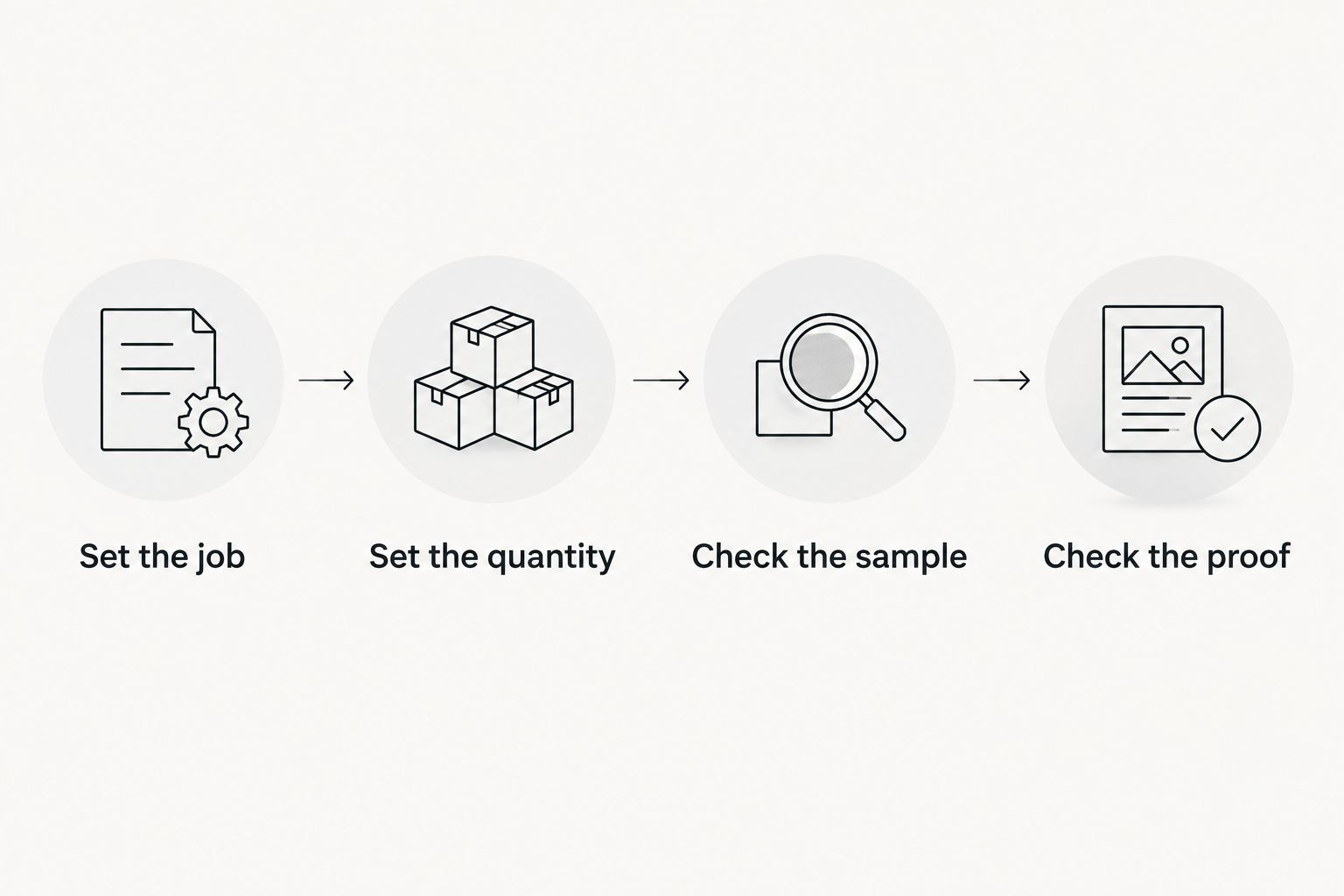
Use this sequence to keep the stock decision tied to the job. Arif Printing offers business cards for local buyers; bring clear requirements rather than asking for the best paper without describing its use.
Set the job
Decide whether the card is an introduction, a routine handout or something you will write on. Pick the use case first. That removes options that solve the wrong problem.
Set the quantity
Count where the cards will go: your pocket, the counter, an event table or customer paperwork. Give the printer the intended quantity and your actual deadline. Ask which parts of the specification change the final quote.
Check the sample
Handle the paper. Write on it if the job needs handwriting. Look at the surface under ordinary light rather than judging it only from a product description.
Check the proof
Read every phone number, email address and name. Confirm that the artwork and selected paper work together. A proof check and a paper check answer different questions; you need both.
Keep the approved stock description with your artwork file. Include thickness, coating and any named paper specification supplied with the order. That makes the next order easier to describe accurately.
Which business card paper stock should you choose?
Choose 16PT cardstock if you need one everyday business card and have no special writing or texture requirement. Confirm its finish before approving production.
Choose 14PT for routine distribution, 18PT when extra thickness is intentional, uncoated stock when handwriting matters, and cotton stock when the material is part of the design. Do not add an upgrade that solves no problem.
For your 2026 order, make the final decision with the actual paper in hand. A stock name narrows the choice. A sample tells you whether that choice fits your job.
FAQ
What's the best business card paper stock for a small business?
16PT cardstock is the default recommendation for an everyday small-business card. It sits between 14PT and 18PT in thickness; choose the coating separately to suit your artwork and writing needs.
Is 16PT better than 14PT for business cards?
16PT is better when you want more thickness; 14PT suits a lighter routine handout. Neither specification tells you the finish, stiffness or writing performance of the complete card.
What does PT mean on business card paper?
PT describes thickness in thousandths of an inch. A 14PT card is 0.014 inches thick, a 16PT card is 0.016 inches thick and an 18PT card is 0.018 inches thick.
What's the best business card stock for writing appointments?
Uncoated cardstock is the starting recommendation for handwritten appointment cards. Test the actual paper with your usual pen and leave a clear writing area in the artwork.
Are cotton business cards always thicker?
No. Cotton describes fiber content, not a fixed thickness. Check the exact paper specification and handle a sample before selecting it.
Should I choose paper stock or the finish first?
Choose the card's job first, then select paper and finish together. A writable appointment card and a photo-heavy introduction card have different surface requirements.
Where can I discuss business card printing in Aurora?
Arif Printing is a local Aurora print shop offering business cards to Denver-area small businesses and individuals. Describe your quantity, artwork, deadline and intended use, then confirm the exact stock and finish.
One last thing
PT measures thickness, not quality. It does not specify fiber content, surface treatment or how cleanly your design prints.
For a 2026 reorder, keep a finished card as your reference sample. Bring that card alongside the artwork file. The physical reference helps you explain what you want repeated—and what you want changed.