Best overall: outdoor-rated calendered vinyl for flat surfaces. Best for curves: cast vinyl. Best for see-through window graphics: clear outdoor-rated vinyl. This 2026 guide explains the best custom sticker material for outdoor use by surface, exposure and purpose—not by a waterproof claim alone.
- The best custom sticker material for outdoor use is outdoor-rated vinyl matched to the surface and adhesive requirements.
- Choose calendered vinyl for flat signs and cast vinyl for curved vehicle panels.
- Choose clear vinyl for transparent window graphics, polyester for flat equipment labels, and reflective film for nighttime visibility.
- Arifprinting serves Aurora and Denver-area print buyers; prepare surface details, artwork dimensions and quantities before discussing your job.
Why this matters
An outdoor sticker is a stack: face material, adhesive, ink and any protective laminate. The face material alone does not tell you whether the finished sticker belongs outside. A waterproof film can still carry ink or adhesive unsuitable for the job.
Arifprinting is a local print shop serving Aurora and the Denver metro area. For an outdoor sticker material discussion, bring the surface details—not just the artwork. Painted metal, glass and textured plastic present different problems.
Buy the complete construction for the application, not a material name in isolation. That is the central buying rule for this 2026 guide.
What makes the best outdoor sticker material?
Use these criteria before choosing a film:
- Surface fit: Flat panels and compound curves need different films. A decal that lies flat on a sign does not automatically belong over a vehicle recess.
- Outdoor construction: Check the film, ink and adhesive specifications together. Add a compatible protective laminate when the application calls for it.
- Adhesive match: Confirm compatibility with the actual substrate, including its coating, texture and condition. Permanent and removable adhesives serve different jobs.
- Readable artwork: Judge contrast on the installed surface. Transparent material and dark glass can make artwork disappear without an opaque backing.
- Removal needs: Decide whether the sticker is a temporary promotion or a lasting identifier. Removal behavior belongs in the specification before production.
- Documented exposure: Look for manufacturer guidance covering the intended orientation and conditions. Do not turn a film's stated service life into a guarantee for every installation.
The best choice in 2026 still depends on where the sticker goes. A showroom window and a sun-exposed equipment panel are not the same application.
Outdoor sticker materials at a glance
These rankings describe material constructions, not specific products. Each option needs an outdoor-rated version suitable for its intended surface.
| Material | Best for | Standout feature | Key limitation |
|---|---|---|---|
| Calendered vinyl | Flat business signs and general decals | Practical conformability for flat or gently curved surfaces | Not the default for deep recesses or compound curves |
| Cast vinyl | Curved vehicle panels | Greater conformability than typical calendered film | Requires compatible film, adhesive and installation technique |
| Clear vinyl | Transparent window graphics | Leaves unprinted areas see-through | Artwork can lose contrast without white ink or backing |
| Polyester film | Flat equipment identification | Dimensional stability | Less suitable for wrapping around complex curves |
| Reflective film | Labels intended to return light at night | Reflects light toward its source | Visibility depends on lighting and viewing geometry |
1. Calendered vinyl: best outdoor sticker material for flat signs
Outdoor-rated calendered vinyl is the default starting point for flat signs, smooth panels and general business decals. It gives you a printable plastic film without asking you to specify a vehicle-wrap construction for every sticker.
Use it where the surface shape suits the particular film. Calendered vinyl is a broad category; adhesive, film grade and protective finish still change the finished result.
Calendered vinyl pros:
- Suits many flat sign and decal applications.
- Supports opaque artwork when supplied with a white face.
- Comes in constructions with different adhesive and removal requirements.
Calendered vinyl cons:
- Typical calendered films are less conformable than cast films.
- Stretching film into a recess can create stress that contributes to lifting or shrinkage.
- An outdoor-rated face does not make every ink and adhesive combination suitable outside.
Best for: Small-business decals on flat, smooth surfaces where transparency and nighttime reflectivity are unnecessary.
For an Aurora storefront project, identify the panel material and whether the sticker faces outdoors before asking for a quote. Also distinguish a sticker applied to a sign from the sign panel itself; they are separate material decisions.
Verdict: Buy outdoor-rated calendered vinyl for ordinary flat-surface decals. Skip it for complex vehicle contours unless the specific film permits that use.
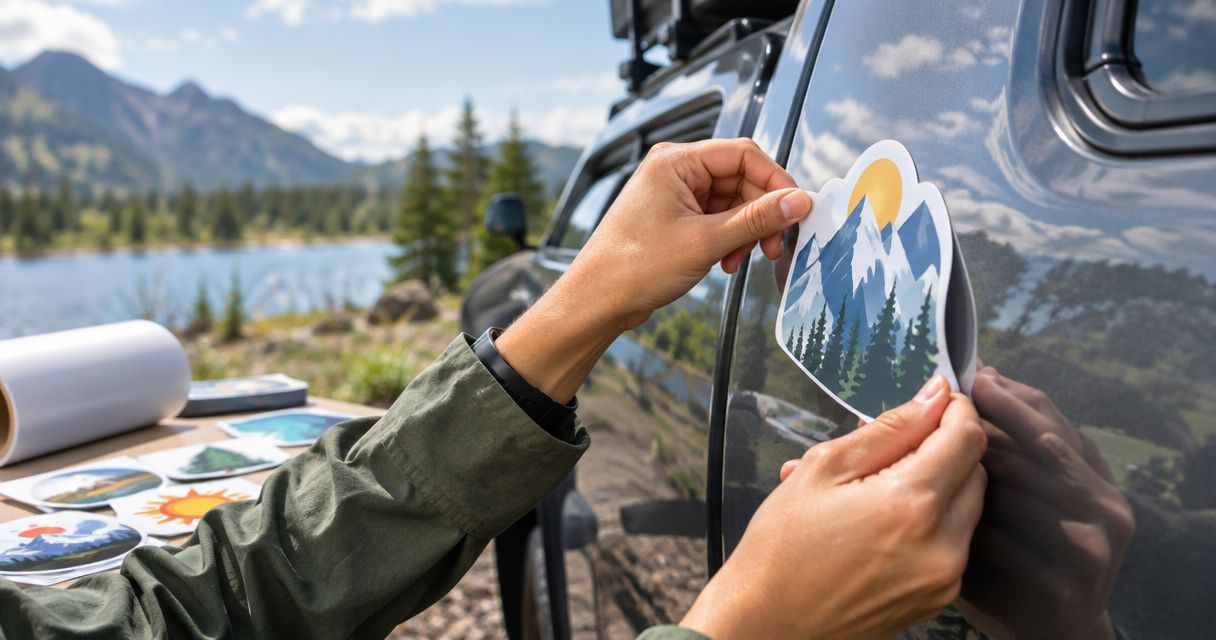
2. Cast vinyl: best outdoor sticker material for curved vehicle panels
Cast vinyl is the stronger starting point when the decal must follow curves, contours or vehicle bodywork. Its manufacturing process produces film with less internal stress than typical calendered vinyl, which helps it conform to demanding shapes.
That does not mean every cast film belongs on every curve. The manufacturer's application instructions still control stretching, recess work and installation conditions.
Cast vinyl pros:
- Better suited to complex curves than typical calendered vinyl.
- Useful for graphics that need to follow vehicle body contours.
- Available as part of matched film-and-laminate systems.
Cast vinyl cons:
- Material choice does not replace correct installation.
- Paint condition and adhesive compatibility still matter.
- A cast construction adds little practical benefit when the job needs only a simple flat label.
Best for: Vehicle graphics and decals that cross curved panels or other demanding contours.
Do not buy cast vinyl merely because it sounds like the highest grade. Buy it because the surface requires its conformability. A small door decal on a flat area and a graphic stretched through a recessed panel need separate assessments.
Verdict: Buy cast vinyl when shape is the deciding factor. Hold the order until the installer confirms the construction suits the panel.
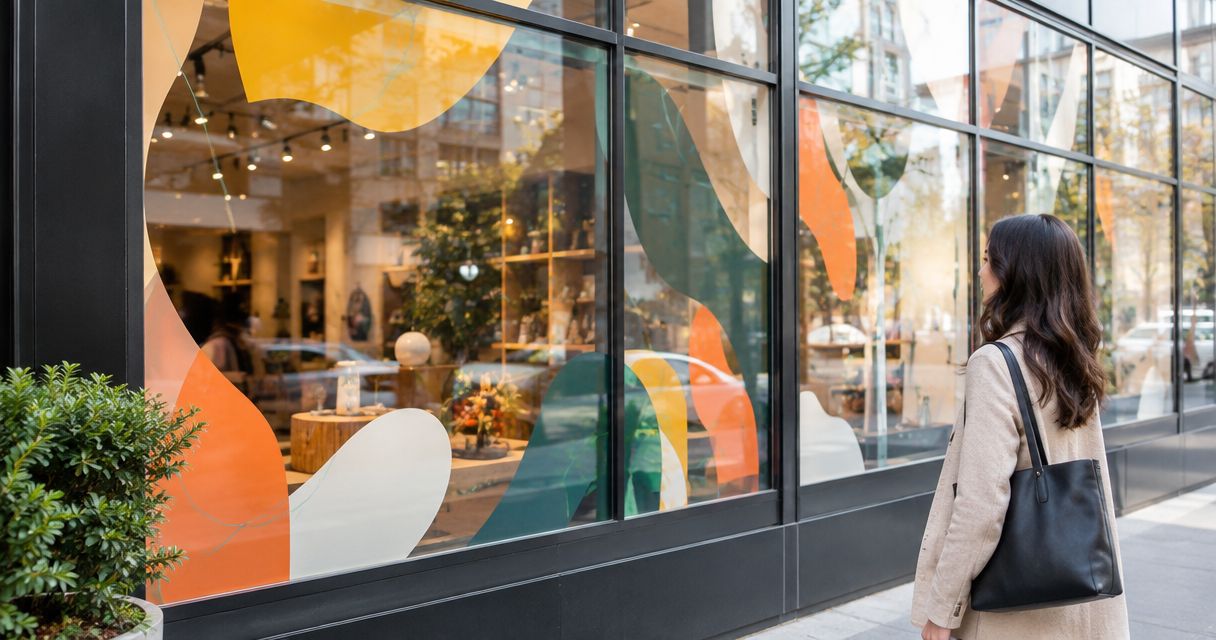
3. Clear vinyl: best outdoor sticker material for window graphics
Clear outdoor-rated vinyl lets the window remain visible through unprinted areas. Choose it when transparency is part of the design—not when you simply want a sticker that happens to go on glass.
Printed colors generally need an opaque white layer to remain strong against changing backgrounds. Without that backing, the room, vehicle interior or street behind the glass becomes part of the artwork's appearance.
Clear vinyl pros:
- Preserves visibility through unprinted areas.
- Works for designs where a transparent background is intentional.
- Can support selective opaque areas when the printing process provides white ink.
Clear vinyl cons:
- Dark or variable backgrounds can reduce contrast.
- White artwork needs a printing construction capable of producing it.
- Inside-glass installation requires the print order and viewing direction to be specified correctly.
Best for: Window logos and graphics that need a see-through background.
Check the design against the actual window, not only a white computer canvas. In 2026, the practical question remains simple: will someone outside read the lettering against what is behind the glass?
If you want inside placement with outside readability, state that before production. Artwork orientation, adhesive position and opaque layers must work together.
Verdict: Buy clear vinyl for deliberate transparency. Skip it when the design needs an opaque background and there is no reason to preserve the view.
4. Polyester film: best outdoor sticker material for equipment labels
Outdoor-rated polyester film is a useful choice for flat equipment identification and labels where dimensional stability matters. Specify a construction intended for the environment rather than assuming any polyester label is suitable outdoors.
Equipment labels often face more than rain. Cleaning agents, friction and contact with oils can matter, so the adhesive, print and protective layers need to match those exposures.
Polyester film pros:
- Provides dimensional stability for flat labels.
- Suits identification artwork that needs a consistent shape.
- Offers an alternative to conformable vinyl when wrapping is unnecessary.
Polyester film cons:
- Less conformable than vinyl intended for curved applications.
- Chemical resistance depends on the complete label construction.
- Rough or difficult surfaces still require a suitable adhesive.
Best for: Flat equipment labels, identification markings and asset labels with documented outdoor requirements.
List the cleaning products used on the equipment. Also identify whether the label sits on bare metal, painted metal or plastic. Those details matter more than choosing polyester from a material dropdown.
Do not treat this recommendation as a substitute for a required safety-label specification. Regulated or safety-critical markings need their own applicable requirements.
Verdict: Buy specified outdoor polyester for flat equipment identification. Skip it for decals that must stretch around compound curves.
5. Reflective film: best outdoor sticker material for nighttime visibility
Retroreflective film returns incident light toward its source. That makes it useful when a label needs to stand out under vehicle headlights or another nearby light source.
Reflective film is not glow-in-the-dark material, and it does not create its own light. Its appearance depends on the film construction, illumination and viewing angle.
Reflective film pros:
- Adds light-returning behavior that ordinary printed vinyl does not provide.
- Suits identification graphics intended to be noticed under headlights.
- Can support printed graphics when the chosen film permits the printing process.
Reflective film cons:
- It does not remain illuminated without incoming light.
- Printing and overlamination must be compatible with the film.
- A decorative reflective sticker is not automatically a compliant safety marking.
Best for: Outdoor identification decals where visibility under directed light is a specific requirement.
Ask whether the label's purpose is branding, identification or regulated safety marking. These are different jobs. Reflectivity alone does not establish compliance, and additional printed layers can affect how the finished construction performs.
Verdict: Buy reflective film when returning light solves a real visibility problem. Skip it for ordinary daylight branding.
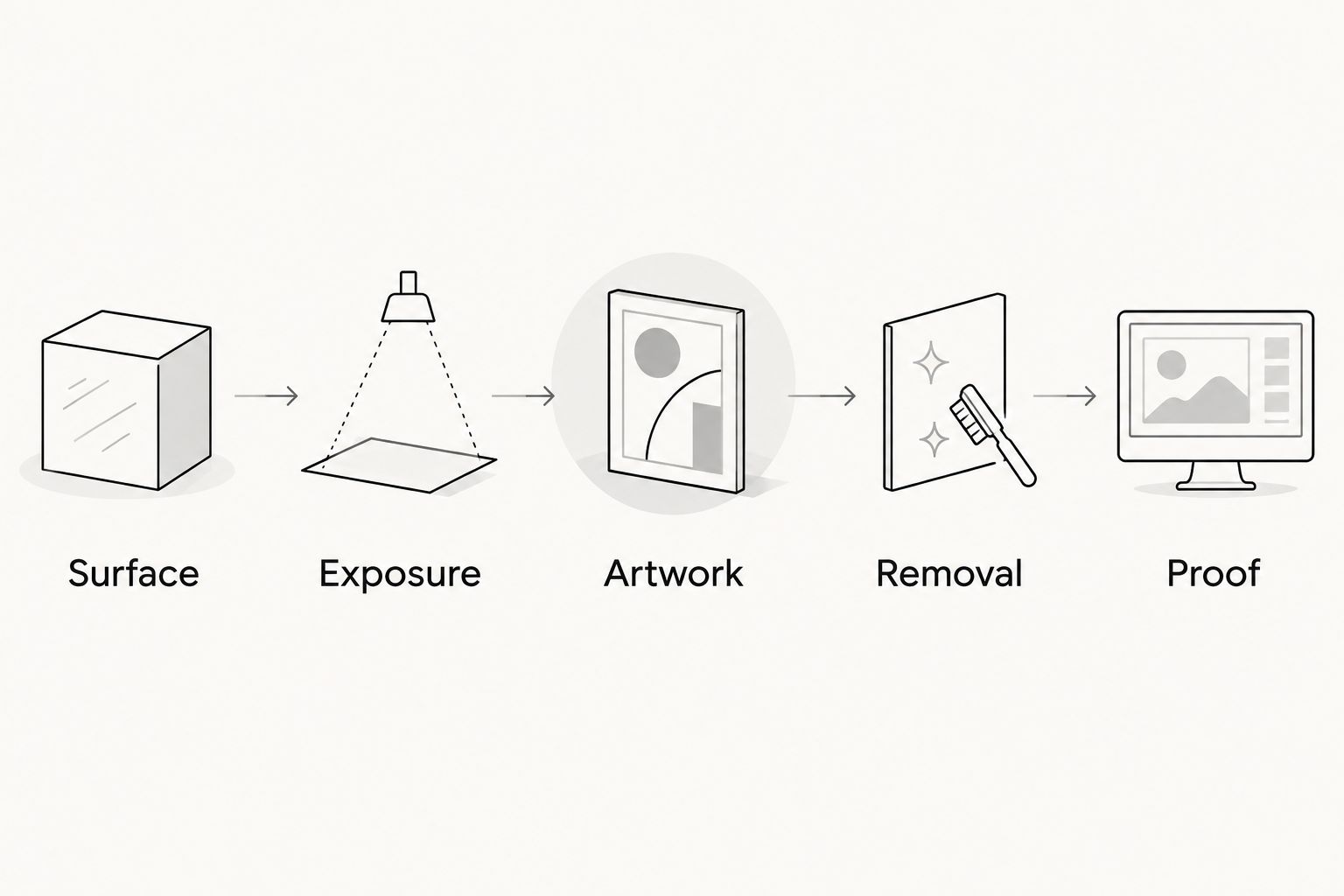
How to specify your sticker before ordering
Use this sequence for a 2026 order. It keeps the material discussion tied to the job rather than a vague request for something weatherproof.
- Surface: Identify the substrate, coating, texture and curves. Describe its condition, including damaged paint or residue.
- Exposure: List outdoor placement, direct sun, washing, abrasion and contact with cleaning products.
- Artwork: Supply finished dimensions and explain whether the design needs transparency, white ink or fine detail.
- Removal: State whether the graphic is temporary or intended to stay. Describe any concern about the underlying finish.
- Proof: Check the design at its finished size and confirm the complete material construction before approval.
View the artwork at 100% scale. If the finished sticker is 2 inches wide, inspect a proof at that width rather than judging an enlarged screen image. Small lettering needs to work at the size you will actually install.
For placement checks, compare 2 sample locations on the intended surface. Look for differences in texture, curvature and contact with water or cleaning tools. A successful sample in one location does not establish suitability everywhere.
For an outdoor sticker material inquiry with Arifprinting, organize these details alongside your quantity and deadline. A clear brief gives the print shop something specific to assess.
What changes the final quote?
Material is only part of the job. Finished dimensions, quantity, print coverage, white ink, protective laminate, cut shape and artwork preparation all affect the production requirements.
Ask for separate specifications when comparing quotes. A clear window sticker with an opaque backing is not the same construction as a clear sticker printed without one. Likewise, an unlaminated equipment label and a label with a specified protective layer are different jobs.
Compare equivalent constructions, not just identical quantities. Confirm installation responsibility and removal requirements as well. Do not assume those services or outcomes are included.
Discuss your print project
Bring your surface details, finished dimensions, quantity and deadline.
How we ranked the materials
The ranking prioritizes surface fit, outdoor construction, adhesive compatibility, readable artwork and removal requirements. Calendered vinyl takes the default slot for flat decals; the other options solve distinct problems rather than competing for the same job.
These are application-based recommendations, not a claim that one unnamed film outlasts another. Manufacturer specifications and the finished printed construction decide suitability.
Which outdoor sticker material should you choose?
Start with outdoor-rated calendered vinyl for a flat, smooth surface. Switch to cast vinyl for demanding curves, clear vinyl for intentional transparency, polyester for flat equipment identification, or reflective film for light-returning visibility.
Then confirm the adhesive, ink and protection. The best custom sticker material for outdoor use in 2026 is the construction that matches your surface and exposure—not the option with the broadest weatherproof description.
FAQ
What's the best custom sticker material for outdoor use?
Outdoor-rated vinyl is the best starting point for general outdoor decals. Choose calendered vinyl for flat surfaces and cast vinyl for demanding curves, then confirm the adhesive, ink and protective layers.
Is vinyl better than paper for outdoor stickers?
Outdoor-rated vinyl is a better starting point than ordinary uncoated paper for exposed outdoor stickers. Specialty paper constructions require their own specifications; the word paper alone does not establish outdoor suitability.
Do outdoor vinyl stickers need laminate?
Use a compatible protective laminate when the application and print system require it. Laminate can protect the printed surface, but it does not correct an unsuitable adhesive or a film applied to the wrong surface.
Are waterproof stickers also sun-resistant?
A waterproof claim does not establish resistance to sunlight. Check the finished construction's outdoor exposure guidance, including the printed ink and any protective layer.
Should I choose clear or white vinyl for a window?
Choose clear vinyl when transparent areas are part of the design; choose white vinyl when an opaque background is the goal. Clear artwork needs suitable white ink or backing when strong color and lettering contrast are required.
Can I put an outdoor sticker on textured plastic?
Use only a label construction specified for the particular plastic and texture. Standard adhesive on a smooth test panel does not establish adhesion to a rough or difficult plastic surface.
How long will an outdoor sticker last in 2026?
There is no single service life for all outdoor stickers in 2026. Use the manufacturer's guidance for the exact film, print system, protective layer, surface orientation and exposure conditions.
One last thing
Write the viewing side on your window-sticker brief. An inside-mounted graphic read from outside needs the correct orientation and layer arrangement before printing; rotating the finished sticker cannot fix the wrong construction.
For Arifprinting and any other print shop, a useful request is specific: where it goes, which side you read, how large it is and whether it must come off later. Bring that information before choosing the material.