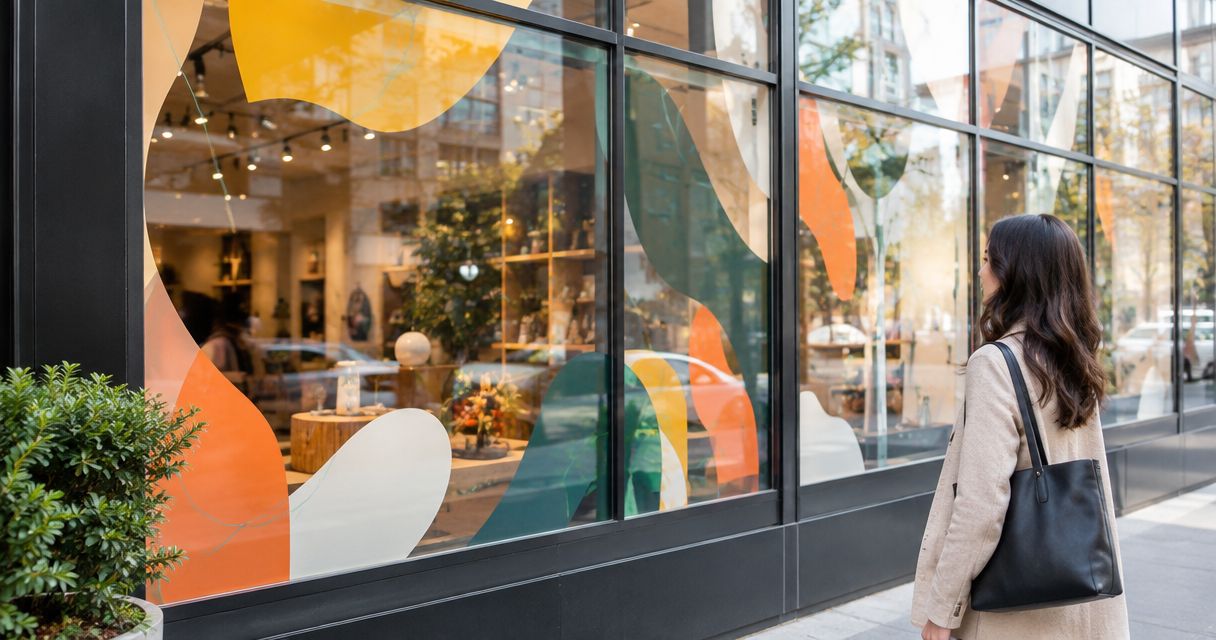
Best overall for a bold storefront message: opaque adhesive vinyl. Best for preserving an outward view: perforated window film. Best for reusable indoor promotions: static cling. This 2026 guide compares the best window graphics material for storefront use by visibility, privacy, installation position, and how often you change the message.
- Opaque adhesive vinyl is the best window graphics material for storefront messaging when blocking the covered view is acceptable.
- Perforated window film balances printed coverage with outward visibility; lighting changes the privacy effect.
- Choose frosted film for privacy, cut vinyl for lettering, and removable adhesive vinyl for changing promotions.
- Arifprinting is a local printing and signage option for Aurora businesses planning storefront graphics.
Why this matters
Your window has two jobs: show customers what you do and support what happens inside. Covering the glass can make a message easier to read while taking away the view customers or staff need.
Arifprinting is a local printing and signage option for Aurora businesses planning storefront graphics. Start your conversation with Arifprinting by describing the window's job, not just asking for a sticker. Bring dimensions, photos, artwork, and the date you need the finished display.
For a 2026 storefront update, separate permanent information from changing promotions. Your business name and hours belong in a different buying decision from a seasonal offer. That keeps a small message change from becoming a full-window replacement.
What makes the best storefront window graphics material
Use these six criteria before choosing a film. A material that solves one problem can create another.
- Message visibility: Decide whether you need full-color coverage, simple lettering, or a subtle privacy treatment.
- Outward view: Identify which panes staff and customers need to see through. Opaque coverage removes that view wherever it sits.
- Privacy: Separate daytime screening from privacy under changing indoor and outdoor light.
- Change frequency: Match permanent information, temporary promotions, and reusable displays to different attachment methods.
- Installation position: Specify inside or outside mounting. Artwork orientation and the material construction must match.
- Glass compatibility: Check the exact film against the glazing, exposure, and window manufacturer's requirements before installation.
Do not treat every adhesive vinyl as interchangeable. Adhesive type, film construction, printing, and any protective layer affect the finished job. Ask for the actual material specification, not a generic promise that it is suitable for windows.
Storefront window graphics materials at a glance
The order below follows the strongest use case for each material. It is not a claim that one film beats every other film on every storefront.
| Material | Best for | Standout feature | Key limitation |
|---|---|---|---|
| Opaque adhesive vinyl | Bold, full-color storefront messages | Solid coverage behind the printed design | Blocks the view through covered glass |
| Perforated window film | Advertising with an outward view | Printed surface with openings through the film | Privacy changes with lighting |
| Frosted window film | Privacy with a translucent finish | Obscures detail without solid printed coverage | Does not provide a clear view through the covered area |
| Cut vinyl lettering | Names, hours, and simple logos | Individual shapes leave surrounding glass exposed | Not the right format for photographic artwork |
| Static cling | Reusable indoor promotions | Attaches to suitable smooth glass without adhesive | Requires suitable contact and handling |
| Removable adhesive vinyl | Promotions scheduled for replacement | Adhesive-backed graphics intended for later removal | Removal conditions depend on the exact product |
1. Opaque adhesive vinyl: best for bold storefront messaging
Opaque adhesive vinyl gives your graphic a solid background instead of relying on whatever sits behind the window. It suits large lettering, full-color designs, and panes where advertising matters more than looking through the glass.
Best for: Storefront panels carrying a clear business message or a large promotional design.
Opaque adhesive vinyl pros
- Solid coverage separates the design from visual clutter inside.
- Supports full-color graphics rather than only individual letters.
- Lets you dedicate selected panes to advertising while leaving others clear.
Opaque adhesive vinyl cons
- Blocks the view through the covered area.
- A large covered section changes the storefront's open appearance.
- Adhesive and glass suitability require a product-specific check.
Choose the coverage first. A narrow panel beside the entrance serves a different purpose from covering every window. Keep the entrance easy to identify and decide where a customer should still see inside.
For a 2026 redesign, approve the graphic at its intended scale. A readable design on a laptop is not automatically readable from the sidewalk. Check the business name, main message, and contrast without adding extra copy to fill the space.
Verdict: Buy opaque adhesive vinyl when a strong printed message matters more than the view through that pane.
2. Perforated window film: best for advertising with an outward view
Perforated window film has openings through the printed surface. Those openings preserve some outward visibility while the printed face carries the advertising message.
Best for: Storefront windows where you want printed coverage without completely closing off the outward view.
Perforated window film pros
- Combines a printed graphic with openings for visibility.
- Suits broad designs across a window area.
- Offers an alternative to fully opaque coverage.
Perforated window film cons
- The perforations interrupt the printed image.
- Small text and fine details are less suited to the interrupted surface.
- The privacy effect depends on relative lighting inside and outside.
Perforated film is not guaranteed nighttime privacy. When the interior is brighter than the exterior, people outside can see through the openings more readily. Check the window during business hours and after dark before making privacy part of the brief.
Ask which viewing direction the proposed construction supports. Inside-mounted and outside-mounted graphics are not interchangeable merely because both sit on glass. The print arrangement must suit the intended viewing side.
Verdict: Buy perforated window film for advertising with an outward view; skip it as your only nighttime privacy measure.
3. Frosted window film: best for privacy without solid graphics
Frosted window film obscures detail through the covered glass while retaining a translucent appearance. It is a privacy treatment first, not a substitute for a full-color advertising panel.
Best for: Meeting areas, service rooms, and storefront sections where you want visual separation rather than a clear view.
Frosted window film pros
- Obscures detail without using an opaque printed panel.
- Can define a privacy band instead of covering the entire pane.
- Works with restrained lettering or simple decorative shapes.
Frosted window film cons
- Removes the clear view through the treated area.
- Does not communicate a detailed promotional message on its own.
- Privacy depends on coverage and the selected film's appearance.
Set the covered area around the activity inside. A band across seated sightlines is a different layout from full-height treatment. Check whether uncovered sections defeat the privacy you are trying to create.
Request a sample of the intended finish. Frosted effects vary, and a screen mockup cannot show exactly how a physical film transmits light or obscures objects behind it.
Verdict: Buy frosted window film when privacy is the job; choose another material when advertising is the main job.
4. Cut vinyl lettering: best for names, hours, and simple logos
Cut vinyl lettering uses separate letters and shapes rather than a printed rectangular panel. The glass around the design stays exposed, which keeps the storefront visually open.
Best for: Business names, opening hours, door instructions, and simple logos.
Cut vinyl lettering pros
- Leaves unused glass uncovered.
- Gives simple messages a clean outline without a panel background.
- Supports a focused layout on entrance doors and nearby panes.
Cut vinyl lettering cons
- Does not reproduce photographs or continuous-tone artwork.
- Thin details and complicated shapes make handling more demanding.
- Contrast depends partly on what is visible behind the glass.
Keep permanent information separate from temporary offers. If your hours change in 2026, a separate hours layout avoids rebuilding an unrelated graphic just to update the schedule.
Check the design against the actual window background. Lettering that looks clear on a white proof can disappear against a bright interior, dark shelving, or reflections. Evaluate the viewing conditions, not only the artwork file.
Verdict: Buy cut vinyl lettering for essential storefront information; skip it for photographic campaigns.
5. Static cling: best for reusable indoor promotions
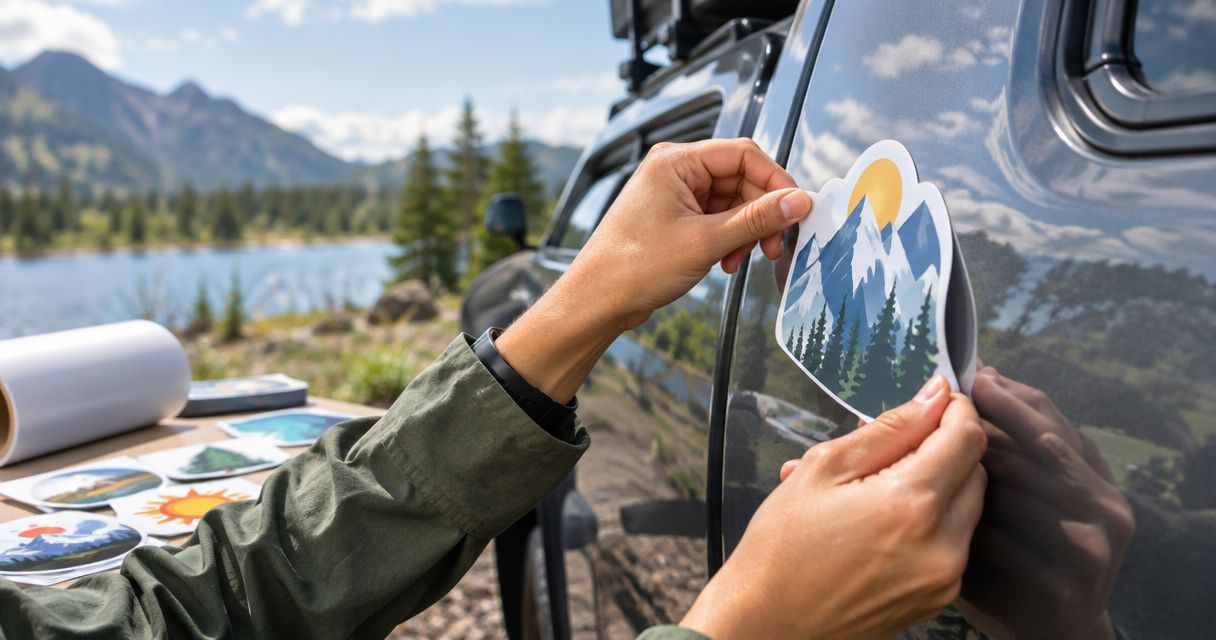
Static cling attaches to suitable smooth glass without an adhesive layer. It suits displays you want to remove and reuse, provided the material stays clean and you follow its handling instructions.
Best for: Indoor-facing applications for recurring promotions or temporary notices, with the construction matched to the viewing side.
Static cling pros
- Avoids adhesive contact with the glass.
- Can be removed and repositioned on a suitable surface.
- Fits reusable displays when stored and handled correctly.
Static cling cons
- Dirt and poor contact interfere with attachment.
- Reuse depends on keeping the material clean and undamaged.
- Exposure suitability varies by product; indoor and outdoor uses need separate checks.
Do not select static cling solely because you want easy removal. A reusable graphic also needs a storage plan. Keep the backing or follow the supplier's storage instructions so the next installation does not start with a damaged display.
Confirm how an inside-mounted design will read from outside. The attachment method alone does not tell you whether the printed image faces the customer correctly.
Verdict: Buy static cling for reusable indoor displays; skip it when the exposure or attachment conditions do not suit the product.
6. Removable adhesive vinyl: best for changing storefront promotions
Removable adhesive vinyl uses an adhesive intended to permit later removal under specified conditions. It fits campaigns that need adhesive attachment but are not meant to become permanent storefront information.
Best for: Promotional graphics with a planned removal date.
Removable adhesive vinyl pros
- Provides adhesive-backed contact for temporary displays.
- Supports printed designs without restricting you to cut letters.
- Lets you treat campaign graphics separately from permanent signage.
Removable adhesive vinyl cons
- Removable does not mean reusable.
- Clean removal depends on the product, surface, exposure, and time in place.
- Leaving a temporary graphic beyond its specified conditions complicates removal.
Record the installation date and intended removal date. For a 2026 promotion, assign removal to the campaign plan rather than leaving it as an unspecified future task.
Ask for the exact removal guidance before approving the material. Do not assume every product described as removable behaves the same way on your glazing.
Verdict: Buy removable adhesive vinyl for scheduled promotions; skip it when you need a graphic to remove and reuse.
How these materials were ranked
The ranking puts bold storefront communication first, then separates outward visibility, privacy, simple information, reuse, and scheduled replacement. Each material owns a different job.
No material wins on every criterion. Choose the window's job before choosing the film. Glass compatibility and installation position are approval checks for every option, not bonus features belonging to one material.
Build a quote brief that prevents rework
Give Arifprinting a clear storefront graphics brief before approving production. Separate what you want printed from where and how it must work.
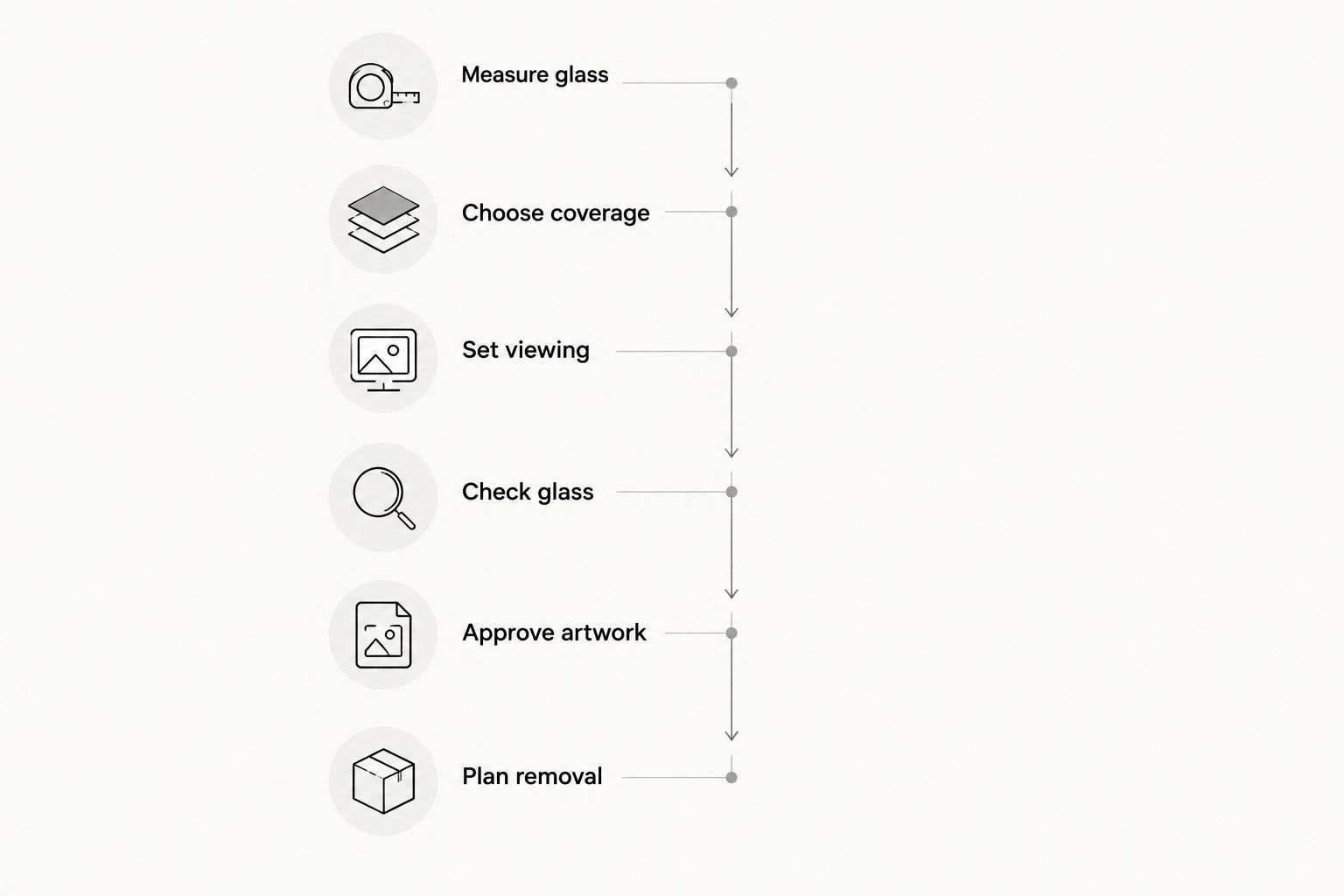
Use this sequence:
- Measure glass: Record usable glass dimensions, not the surrounding frame.
- Choose coverage: Mark the areas that must remain clear.
- Set viewing: Specify whether customers read the graphic from outside or inside.
- Check glass: Identify glazing requirements and confirm material compatibility.
- Approve artwork: Check wording, scale, orientation, and placement.
- Plan removal: Set the replacement or removal requirement for temporary graphics.
For example, a brief for 2 window panes and 1 entrance door needs separate placements. If a measured pane is 36 inches wide by 48 inches high, label those dimensions as the glass size, then mark the intended graphic area separately. These are example measurements, not a recommended storefront layout.
Ask what the quote includes: material, printing, artwork preparation, installation, and removal of existing graphics. Confirm responsibilities rather than assuming every step belongs to the same job. Arifprinting handles local printing and signage; agree on the scope of your storefront project directly.
Which storefront window graphics material should you choose?
Choose opaque adhesive vinyl as the default for a bold printed panel, not as the default for every window. Keep cut lettering for essential information, frosted film for privacy, and perforated film for areas where outward visibility matters.
For your 2026 order, use static cling when reuse is the requirement and removable adhesive vinyl when scheduled replacement is the requirement. One storefront can use different materials because its panes do different jobs.
FAQ
What's the best window graphics material for storefront advertising?
Opaque adhesive vinyl is the best default for a bold printed storefront panel when blocking the covered view is acceptable. Choose perforated film instead when preserving an outward view is part of the brief.
Is perforated window film private at night?
Perforated window film does not guarantee nighttime privacy. Its privacy effect depends on relative lighting, and a brighter interior makes inward viewing through the openings easier.
Is static cling better than removable vinyl?
Static cling is better suited to reusable displays on suitable smooth glass, while removable adhesive vinyl suits campaigns planned for later removal. Removable adhesive vinyl is not automatically reusable.
What should I use for opening hours on a glass door?
Cut vinyl lettering is a practical choice for opening hours on a glass door. Keep the hours separate from other graphics and check that the lettering contrasts with the view behind the glass.
Can storefront graphics go on the inside of the window?
Storefront graphics can go inside when the material and print construction support that installation. Specify the viewing side so customers outside see the artwork in the correct orientation.
What changes a storefront window graphics quote?
Graphic dimensions, material, artwork preparation, installation, and existing-graphic removal change the scope of a storefront window graphics quote. Ask for those parts to be identified before approving the job.
What should I bring to a local print shop for window graphics?
Bring measured glass dimensions, storefront photos, artwork, and your required date. Also identify clear-view areas, privacy needs, installation position, and whether the graphic will stay, change, or be reused.
One last thing
The window is part of the design. Reflections, interior lighting, shelves, and open space become the background wherever you leave glass exposed. Check a placement mockup against a photo of the actual storefront before approving production—not against a blank white page.