Best overall starting point: a 3 × 8 ft banner. Best for sidewalk-facing messages: 2 × 6 ft. Best for a broad storefront: 4 × 10 ft. The best banner size for storefront advertising in 2026 is the largest readable layout your usable frontage and mounting points can support—not simply the biggest sheet you can order.
- The best banner size for storefront advertising starts at 3 × 8 ft when frontage and mounting allow.
- Choose 2 × 6 ft for sidewalk-facing storefront advertising with one short message.
- Choose 4 × 10 ft for broad frontage, but confirm mounting and sightlines before ordering.
- Arifprinting serves Aurora and Denver-area buyers who need custom banners and signs.
Why this matters
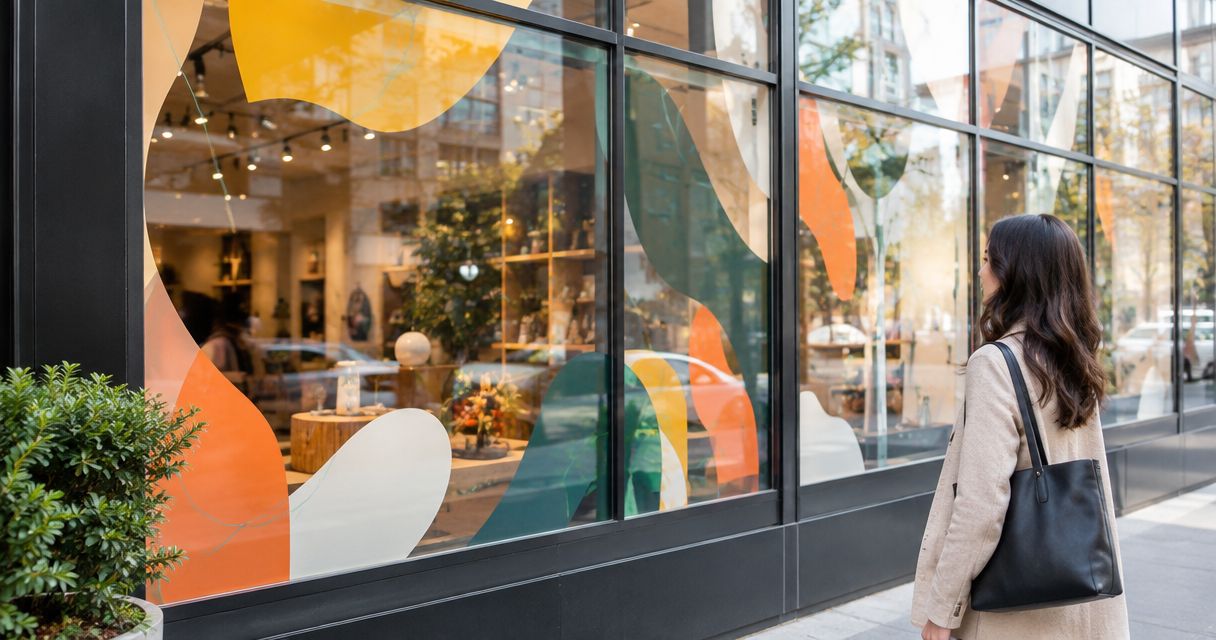
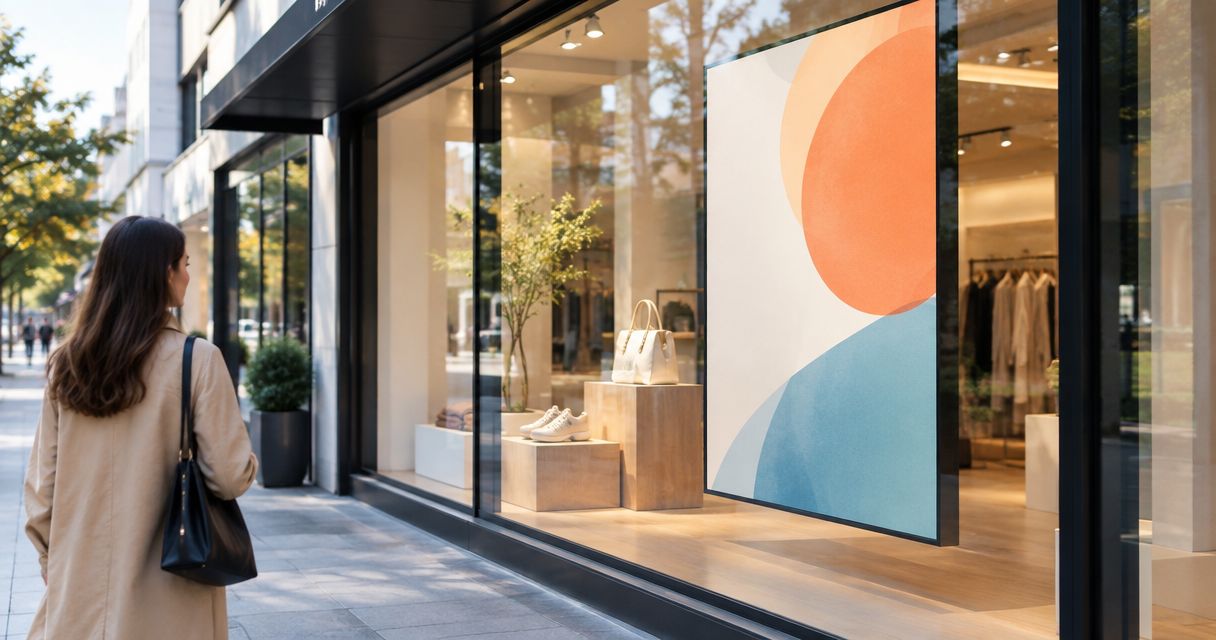
A banner competes with window reflections, parked vehicles, existing signs and the shape of your building. Extra material does not fix crowded artwork. A smaller banner with a clear message beats a larger one filled with details nobody can read from the intended viewing point.
Arifprinting is a local option for Aurora and Denver-area businesses buying custom storefront banners and signs. Start with Arifprinting when you have your dimensions, message and installation location ready to discuss.
The sizes below are planning recommendations, not a claim that every storefront needs the same dimensions. For your 2026 order, choose the location first and the printed size second. Keep required signs, door operation and useful window visibility clear.
What makes the best storefront banner size
Use these criteria before comparing dimensions:
- Usable frontage: Measure the actual space between obstructions, not the full building width.
- Viewing position: Check the banner from the sidewalk, parking area or street where your intended audience sees it.
- Message length: Give one main message room to stand out. Move detailed information elsewhere.
- Shape: Match the artwork to the space. A long horizontal opening calls for a different layout than a narrow wall panel.
- Mounting: Confirm where the banner attaches and how the edges will be supported.
- Exposure: Treat material and size as separate decisions. Outdoor placement needs a material discussion, not just a dimension choice.
For that last decision, read the outdoor vinyl banner materials guide. Do not assume a larger banner needs the same construction or attachment plan as a smaller one.
Storefront banner sizes at a glance
Dimensions below are height × width. Areas are calculated from those dimensions; they describe the printed footprint, not a promised viewing distance.
| Rank and size | Best for | Standout feature | Key limitation |
|---|---|---|---|
| 1. 3 × 8 ft | A balanced horizontal storefront layout | 24 sq ft of message space | Needs a clear horizontal mounting span |
| 2. 2 × 6 ft | Sidewalk-facing promotions | Long, shallow shape for a short headline | Limited height for supporting copy |
| 3. 4 × 10 ft | Broad storefront frontage | 40 sq ft for a larger layout | More demanding mounting and obstruction checks |
| 4. 2 × 4 ft | A compact wall or window-adjacent space | 8 sq ft fits a smaller opening | Little room for details |
| 5. 3 × 6 ft | A stacked headline and supporting line | More height relative to width | Less horizontal headline room than 3 × 8 ft |
These are layout choices, not a product catalog or an availability statement. Confirm the finished dimensions, material and installation requirements before approving a job.
1. 3 × 8 ft: best storefront banner size for a balanced layout
A 3 × 8 ft banner is the default worth sketching first. Its horizontal shape gives a business name or promotion room to sit above a short supporting line without forcing everything into a compact panel.
The 24 sq ft footprint gives you a useful starting canvas. That area does not establish readability by itself: lettering, contrast, placement and nearby clutter still decide whether the message works.
3 × 8 ft pros:
- Gives a short headline substantial horizontal space.
- Accommodates a separate supporting line without requiring a square layout.
- Offers a balanced starting point for comparing smaller and larger options.
3 × 8 ft cons:
- Does not fit a narrow frontage just because the overall building is wide.
- Encourages overcrowding if you treat the extra space as permission to list every service.
Use this size for a single promotion, opening announcement or main service message. Keep the business identity and headline distinct. If both compete at the same visual weight, simplify the artwork before increasing the dimensions.
Best for: A storefront with a clear horizontal mounting area and one main message.
Verdict: Buy if the measured space supports it; this is the default starting point for 2026.
2. 2 × 6 ft: best storefront banner size for sidewalk promotions
A 2 × 6 ft banner suits a shallow horizontal space and a message aimed at people approaching on foot. Use the long shape for a short headline rather than a miniature menu or service list.
The format works as a focused announcement. It is less useful when the artwork needs a large image, several lines and business details competing for attention.
2 × 6 ft pros:
- Fits a shallower opening than the taller options in this guide.
- Gives a short phrase a clear horizontal reading path.
- Helps you keep the message focused instead of building a crowded advertisement.
2 × 6 ft cons:
- Limited height makes stacked copy harder to arrange.
- A layout intended for nearby pedestrians should not be treated as a road-facing solution without a sightline check.
Check this size from the actual walking route. A banner mounted behind reflections, merchandise or a door swing loses its purpose even when the artwork looks clear on a screen.
Best for: A sidewalk-facing storefront promotion with minimal supporting text.
Verdict: Buy for a short pedestrian-facing message; skip it for detail-heavy artwork.
3. 4 × 10 ft: best storefront banner size for broad frontage
A 4 × 10 ft banner gives a broad storefront a larger canvas. Its 40 sq ft footprint is substantially larger than the 24 sq ft offered by a 3 × 8 ft layout, but extra area is useful only when the location exposes it clearly.
Use the added space to enlarge the main message and preserve separation between elements. Do not turn it into a directory of everything your business sells.
4 × 10 ft pros:
- Gives the headline more physical space than the smaller formats listed here.
- Supports a clear hierarchy between business identity, promotion and action.
- Fits a broad opening better than a compact panel floating in unused space.
4 × 10 ft cons:
- Requires more clear mounting space and a suitable attachment plan.
- Can cover useful windows or conflict with existing signage when placement is poorly planned.
For a 2026 exterior installation, discuss the attachment points and exposure before approving artwork. Do not assume an existing small-banner setup suits a substantially larger sheet.
Best for: Broad frontage with an unobstructed display area and confirmed mounting arrangements.
Verdict: Hold until the space, attachment points and sightlines are confirmed; then buy.
4. 2 × 4 ft: best storefront banner size for compact spaces
A 2 × 4 ft banner fits a smaller wall panel or window-adjacent opening. Its 8 sq ft footprint calls for discipline: one message, a clear business identifier and only essential supporting information.
Choose this format because the space is compact, not because you hope tiny lettering will make a full-sized layout fit. Shrinking crowded artwork keeps the crowding and reduces the letters.
2 × 4 ft pros:
- Fits smaller display areas than the other recommended formats.
- Makes a focused message easier to organize.
- Leaves more surrounding frontage uncovered than a larger banner.
2 × 4 ft cons:
- Offers little room for a headline plus several supporting elements.
- Needs a separate solution when the same message must serve a more distant viewing position.
A compact banner can act as a secondary sign near an entrance. Keep its role separate from the main storefront identification so customers know what to read first.
Best for: A small opening or secondary entrance message.
Verdict: Buy for a compact placement; skip it as a substitute for a larger, distant-viewing layout.
5. 3 × 6 ft: best storefront banner size for stacked copy
A 3 × 6 ft banner gives you more height relative to width than the longer horizontal formats. That shape suits a headline above a supporting line when an 8 ft-wide banner does not fit.
Use the height to separate information. A long sentence still needs editing; adding rows does not automatically make it easy to read.
3 × 6 ft pros:
- Supports a headline and supporting line with visible separation.
- Fits a narrower opening than a 3 × 8 ft banner.
- Offers a practical alternative when the layout needs height rather than extra width.
3 × 6 ft cons:
- Gives a long headline less horizontal room than a 3 × 8 ft layout.
- Can become visually dense when several lines receive equal emphasis.
Ask for artwork that establishes a clear first read and second read. The headline should make sense without requiring the reader to finish every line underneath it.
Best for: A medium-width opening with a deliberately stacked message.
Verdict: Buy when the content needs height; skip it when a long headline is the priority.
Choose the size before approving the artwork
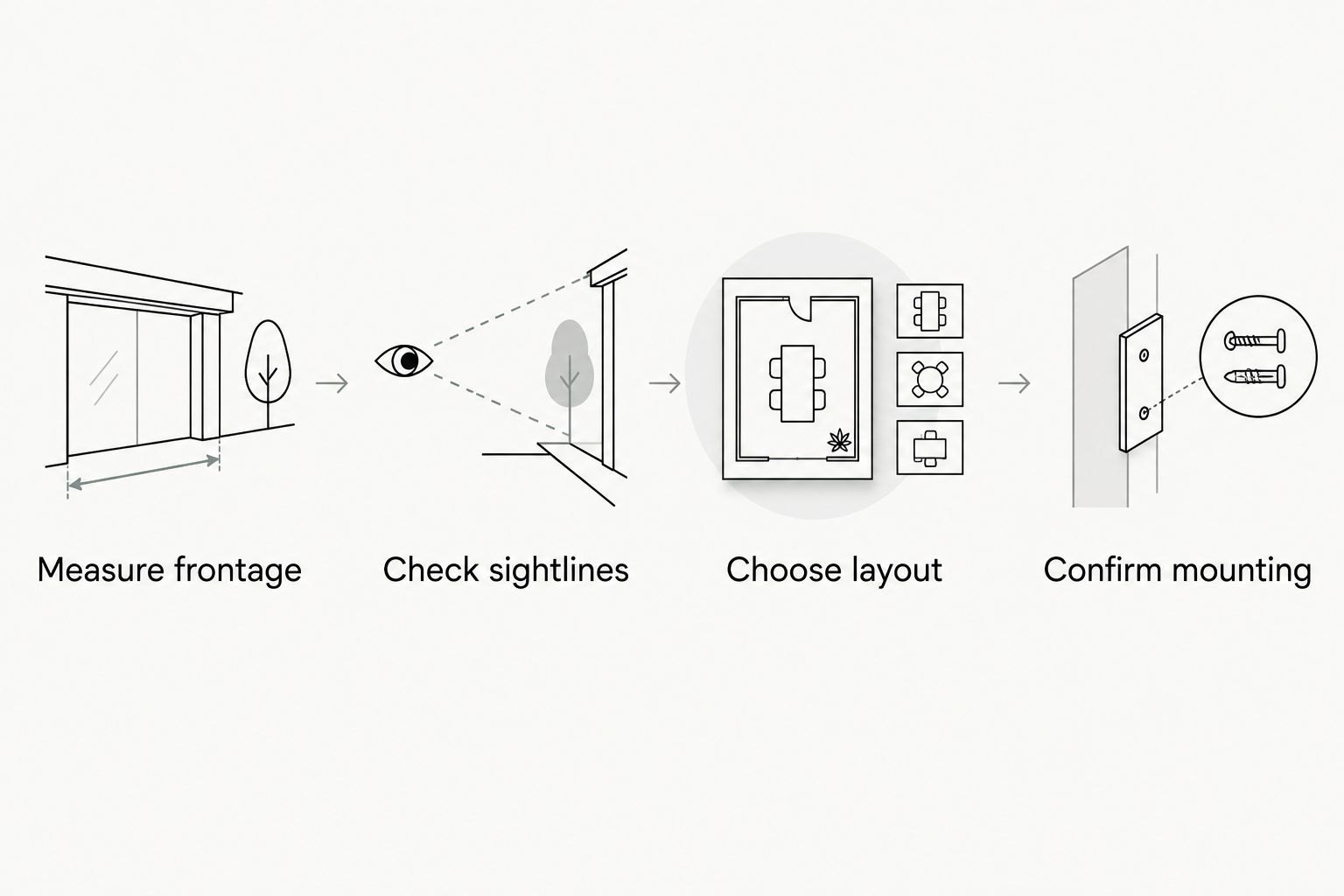
A workable banner order starts with the site, not the design file. Follow this sequence for your 2026 storefront advertising brief.
Measure frontage
Record the usable height and width, along with anything that interrupts the opening. Include doors, fixtures, existing signs and the proposed attachment points. Send a straight-on photo with the measurements so the layout discussion has a clear reference.
Check sightlines
Stand where the intended customer will see the banner. Check parked vehicles, window reflections and neighboring signs. Take a second photo from that position; a close-up alone does not explain how the banner appears in context.
Choose layout
Write the main message before adding graphics. Decide whether the artwork needs a long headline or stacked copy, then choose a size that supports that shape. Make the action clear without requiring a paragraph of explanation.
Confirm mounting
Discuss edge finishing and attachments before signing off on the artwork. Confirm what the mounting location permits and whether permission is needed from the property owner or relevant local authority. Printed dimensions and installation suitability are separate checks.
Give Arifprinting the same brief you would use to judge the finished banner: location, dimensions, message, exposure, installation plan and required date. Ask about artwork help, proofs, local pickup and whether the production queue supports your deadline. Confirm the details for your specific job rather than assuming every order follows the same process.
Discuss your storefront banner
Bring your frontage measurements, message, mounting details and required date.
How these sizes are ranked
The ranking favors message space, storefront fit and a clear reading order. The 3 × 8 ft format leads because it is a useful balanced starting layout; the other sizes earn separate slots for pedestrian messages, broad frontage, compact spaces and stacked copy.
This is a dimension-based buying guide, not a field test or a claim that one size works everywhere. No fixed viewing distance is assigned to any option. Your site and artwork determine the final choice.
Which storefront banner size should you choose?
Start with 3 × 8 ft, then change the size only for a specific reason. Choose 2 × 6 ft for a shallow pedestrian-facing opening, 4 × 10 ft for confirmed broad frontage, 2 × 4 ft for a compact placement or 3 × 6 ft for stacked copy.
For Arifprinting storefront banner orders, bring the measurements before asking which size to print. A quote needs more than dimensions: quantity, material, finishing, artwork, installation requirements and the requested deadline all belong in the discussion.
Before approving your 2026 banner, check the proof for spelling, finished dimensions and the main message. Confirm that the layout matches the measured location rather than simply filling the design canvas.
FAQ
What's the best banner size for storefront advertising?
A 3 × 8 ft banner is a useful overall starting point when your frontage and mounting points support it. Choose a different size when the opening, viewing position or message layout requires one.
Is a 3 × 8 ft banner better than a 2 × 6 ft banner?
A 3 × 8 ft banner is better for a taller layout with more separation between the headline and supporting text. A 2 × 6 ft banner suits a shallower opening and a short sidewalk-facing message.
What banner size should I use for a small storefront?
Use a 2 × 4 ft banner for a compact display area or consider 2 × 6 ft for a longer, shallow opening. Measure the usable space before choosing, and keep the message short.
Will a bigger banner be easier to read from the road?
A bigger banner does not guarantee road readability. Letter size, contrast, placement, obstructions and message length determine whether the intended audience can read it.
Should I put every service on my storefront banner?
No—give the banner one main message. A long service list competes with the headline and makes the artwork harder to read at a glance.
How do I get a quote for a storefront banner?
Provide the finished dimensions, quantity, placement, artwork and required date. Ask Arifprinting to confirm material, finishing, proof arrangements and the details that apply to your job.
Do I need permission to hang a banner outside my business?
Confirm permission before installing an exterior banner. Check the property owner's requirements and the applicable local sign rules for your address and proposed placement.
One last thing
Read the headline without reading anything else. If it does not tell a passerby what matters, rewrite it before ordering a larger banner. More square footage cannot rescue an unclear message.
Keep detailed information on another surface. The banner should earn attention; your window, counter material or other signage can handle the follow-up.