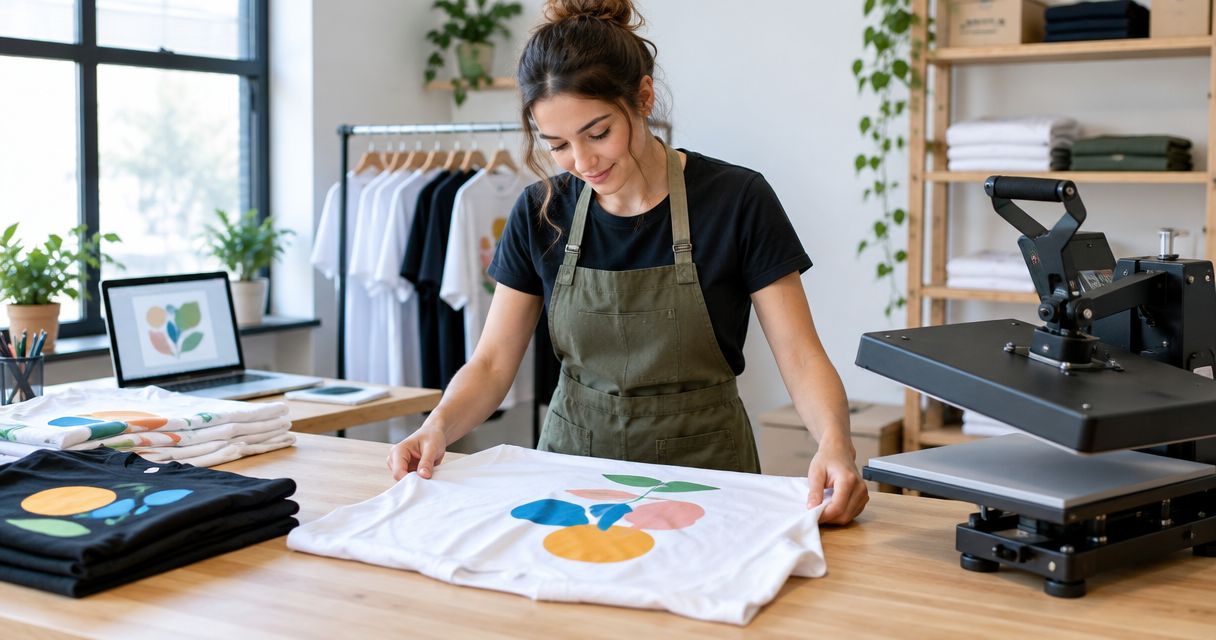
Best overall for mixed small-business shirt orders: direct-to-film (DTF). Best for repeat runs of one design: screen printing. Best for a detailed one-off on cotton: direct-to-garment (DTG). This 2026 guide compares five printing methods so you can match the print to your artwork, shirt fabric and order size before asking a shop for a quote.
- The best t-shirt printing method for small business orders with mixed designs is usually DTF.
- Choose screen printing for repeat runs of the same design; its setup is harder to justify for tiny orders.
- Choose DTG for a detailed cotton one-off, vinyl for simple names, or sublimation for polyester.
- Arifprinting is a local print shop option for Aurora and Denver-area small businesses ordering custom T-shirts.
Why this matters
The wrong method can make a simple order harder than it needs to be. A one-color logo repeated across a batch is a different job from individual staff names or a full-color illustration. Start with the artwork and the garment, then discuss quantity. Choosing a method by name alone skips the details that control the result.
For an Aurora business buying shirts in 2026, the useful question is not whether DTF is newer than screen printing. It is whether your exact design, shirt fabric and reorder plans fit the process. Arifprinting is a local print shop for Aurora and Denver-area buyers ordering custom T-shirts; bring the artwork and intended quantity when you discuss the job.
What makes the best t-shirt printing method?
Use these checks before comparing methods. Each answers a question that can change the recommendation.
- Artwork: Is the design one solid color, a detailed illustration, a photograph or a different name on every shirt? Fine detail and changing artwork narrow the practical choices.
- Garment fabric: Cotton and polyester do not take every process the same way. Choose the shirt before approving the print method, particularly if you are considering sublimation.
- Order quantity: A setup-heavy process makes more sense when you repeat the same design. Small runs and one-offs put more weight on flexibility.
- Print area: A small left-chest mark and a large full-back graphic feel different on a shirt. Ask to see a sample or proof that reflects your intended placement.
- Reorders: If staff shirts will be reordered, keep the artwork and garment details consistent. Changing either can change the job, even when the logo stays the same.
- Personalization: A shared logo with individual names is not the same as an identical batch. Count the variations before requesting a quote.
Do not choose a method until you know the fabric and how many versions of the artwork you need. Those answers rule out more bad fits than a generic ranking can. In 2026, ask for a quote on the actual job rather than treating any method as the automatic low-cost choice.
T-shirt printing methods at a glance
| Method | Best for | Standout feature | Key limitation |
|---|---|---|---|
| DTF | Mixed designs and flexible runs | Full-color artwork transferred to fabric | Large prints can have a noticeable surface feel |
| Screen printing | Repeat runs of one design | Ink applied through screens | Separate setup for design colors makes tiny runs less practical |
| DTG | Detailed cotton one-offs | Artwork printed directly onto fabric | Fabric choice and preparation matter |
| Heat-transfer vinyl | Simple names and numbers | Cut graphics can vary by shirt | Intricate, multicolor artwork takes more handling |
| Sublimation | Polyester shirts with all-over-color goals | Dye becomes part of suitable polyester fabric | Not the choice for a standard cotton shirt |
The table is a starting point, not a substitute for checking your garment. A small logo on a cotton work shirt and a large graphic on a polyester event shirt need separate decisions. The five methods also differ in how much work is repeated when the artwork changes from shirt to shirt.
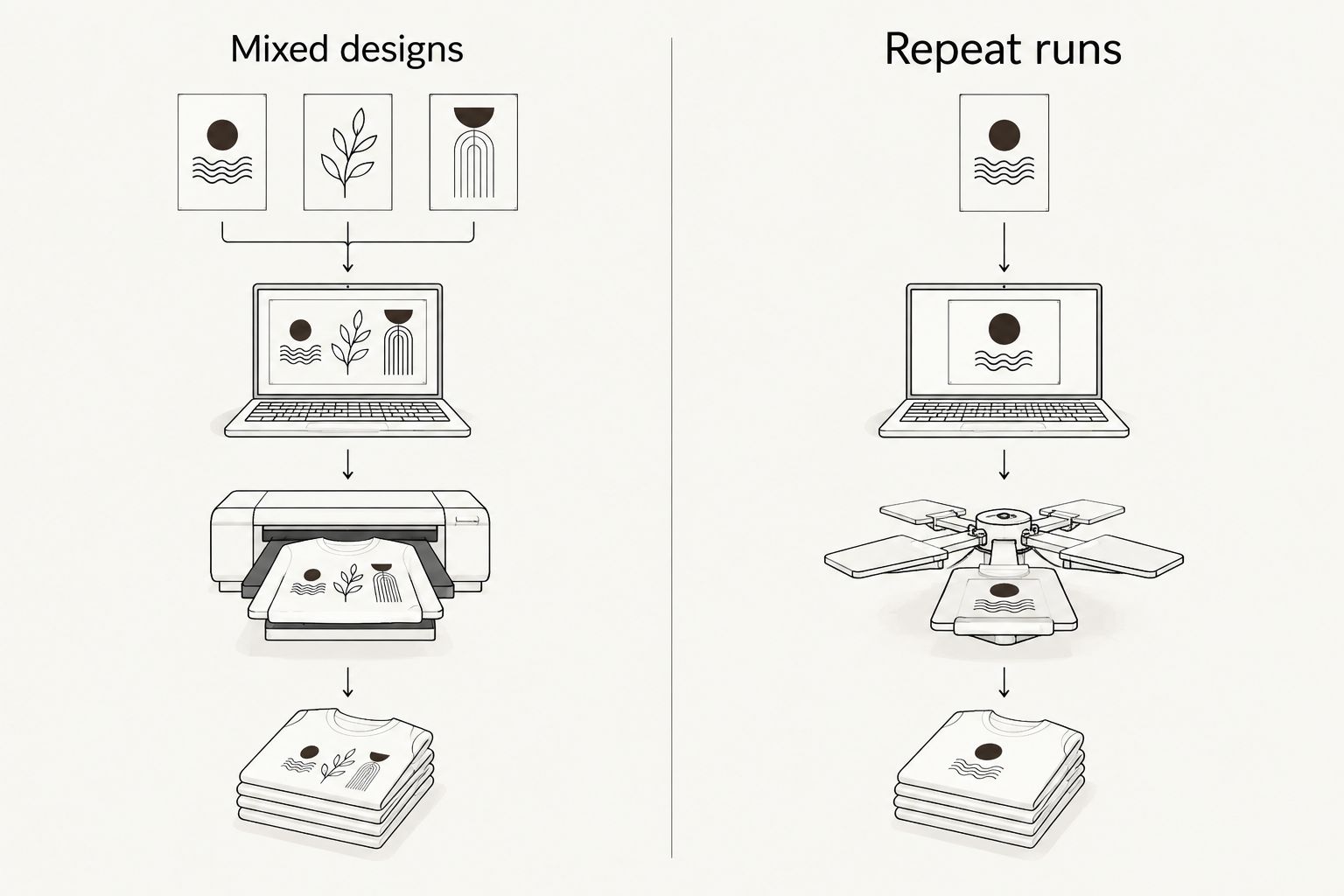
1. DTF: best t-shirt printing method for mixed designs
DTF prints artwork onto film, adds adhesive, then transfers the design to the shirt with heat. It is a practical default when an order includes detailed logos, multiple designs or shirt fabrics that make DTG a poor fit. For a Denver-area small business that changes event graphics while keeping the same basic shirt order, that flexibility matters.
DTF pros:
- Handles full-color artwork without separating each ink color into its own screen.
- Works across a wider range of garment fabrics than sublimation.
- Fits orders where the designs change between batches.
DTF cons:
- A large, solid print can feel like a layer on top of the fabric.
- The final result depends on the transfer, application and garment; the method name alone does not tell you how a shirt will feel.
Best for: Small businesses ordering detailed graphics or changing designs across modest runs.
Check the size of the actual graphic before approving a full front or back. A small logo and a solid panel across the chest are different wearing experiences, even when both use DTF. If feel matters, ask to evaluate the intended print size on a comparable shirt.
Verdict: Buy for mixed designs when you need flexibility more than the particular feel of a directly printed graphic.
2. Screen printing: best for repeat runs of one design
Screen printing pushes ink through a prepared screen onto the garment. It suits a business ordering the same logo repeatedly, especially when the artwork has a limited set of solid colors. Setup is part of the job, so changing the artwork changes the calculation.
Screen printing pros:
- A clear fit for repeating one design across a batch.
- Works well with straightforward logos and solid-color artwork.
- Gives a consistent process when garment and artwork specifications stay fixed.
Screen printing cons:
- Preparing screens makes a tiny run of one design less attractive.
- Additional colors and artwork changes add production steps.
Best for: Teams, shops and event organizers repeating one approved design across a batch.
Before ordering, count distinct print designs, not just shirts. The same front logo on every shirt is one kind of job; a changed sponsor panel for each group is another. Ask the shop to compare the methods using your full design list rather than quoting only the first file.
Verdict: Buy when the design stays fixed across a repeat batch. Hold if every shirt needs different artwork.
3. DTG: best for detailed cotton one-offs
DTG uses a printer to place ink directly onto a garment. It is useful for detailed artwork on suitable cotton shirts when preparing screens for one design does not make sense. The garment and its preparation are part of the result, so confirm the shirt choice with the printer.
DTG pros:
- Suits detailed, multicolor artwork without a separate screen for each color.
- Fits a one-off or a small run with one complex design.
- Prints ink directly onto the garment rather than applying cut vinyl shapes.
DTG cons:
- Fabric choice limits where it is the best fit.
- Garment preparation can be necessary, particularly for some designs and shirt colors.
Best for: A business testing a detailed design on a suitable cotton shirt before committing to a larger order.
In 2026, do not approve a DTG job based only on how the art looks on a screen. Ask what shirt will be printed and how the artwork will sit at its intended size. If the eventual order will use a different fabric, revisit the method before reordering.
Verdict: Buy for a detailed cotton one-off. Hold until the garment is confirmed.
4. Heat-transfer vinyl: best for simple names and numbers
Heat-transfer vinyl, often called HTV, starts with a cut design that is pressed onto the shirt. It makes sense when a shared design needs short, simple variations, such as individual staff names or team numbers. The cuts and application take handling, which is why fine illustrations are a poor match.
Heat-transfer vinyl pros:
- Straightforward for bold text, numbers and simple shapes.
- Lets a basic design vary from shirt to shirt.
- Makes it easy to identify which part of a design must change for each wearer.
Heat-transfer vinyl cons:
- Tiny details and intricate multicolor graphics are harder to cut and prepare.
- Large areas can feel like a layer on the shirt.
Best for: Simple individual names or numbers on shirts that otherwise share a design.
Send names and sizes as a checked list, not in scattered messages. The printing method cannot correct a misspelled name. If your design combines a detailed logo with individual names, ask whether using different methods for the shared art and personalization makes sense.
Verdict: Buy for bold personalization. Skip it for a photographic design.
5. Sublimation: best for suitable polyester shirts
Sublimation uses heat to turn dye into gas so it bonds with a suitable polyester surface. It belongs on the shortlist when your chosen garment is polyester and the design calls for color across a broad area. It does not solve the problem of printing the same design on a standard cotton shirt.
Sublimation pros:
- Color bonds with suitable polyester rather than sitting as a cut shape on top.
- Suits designs that extend well beyond a small chest logo.
- Gives polyester-focused orders a distinct option to compare with transfers.
Sublimation cons:
- Fabric choice is restrictive; ordinary cotton is not the target garment.
- The base garment color affects the visible result, so the shirt must be chosen with the design.
Best for: Polyester event or team shirts where the garment and artwork are planned together.
Do not buy a pile of shirts and ask about sublimation afterward. Confirm the exact garment with the printer first. This is the clearest example of why choosing fabric before print method can leave you with fewer options than expected.
Verdict: Buy for a suitable polyester project. Skip it if the chosen shirt is cotton.
How these methods were ranked
The ranking starts with the jobs a small business actually has to place: mixed designs, a repeat logo, a detailed one-off, individualized names and a polyester-focused design. DTF takes the default slot because it accommodates changing, detailed artwork across more garment choices than the more specialized options. That is a use-case verdict, not a claim that every DTF print beats every screen print.
The limitations matter just as much. Screen printing moves ahead when the design repeats; DTG moves ahead for the right cotton one-off. Vinyl and sublimation earn narrower slots because their strengths depend on simple cut graphics and suitable polyester, respectively. Compare your artwork, fabric and variations against the table before asking for a quote.
Which t-shirt printing method should you choose?
Choose DTF if you need a default for mixed small-business orders in 2026. Choose screen printing instead when one design repeats across the batch. Pick DTG for detailed artwork on a suitable cotton one-off, heat-transfer vinyl for simple individual names or numbers, and sublimation only when the polyester garment fits the process.
Arifprinting is best for Aurora and Denver-area businesses that want to order custom T-shirts through a local print shop. For a useful discussion, bring the artwork, your proposed garment, the shirt count, the print placement and a list of any names or design changes. Arifprinting's referenced quantity guide identifies 12, 24, 50 and 100 pieces as order tiers; ask for a current quote based on your actual job rather than assuming a tier settles the choice of method.
Discuss your shirt order
Bring your artwork, garment choice and quantity to the conversation.
FAQ
What's the best t-shirt printing method for a small business?
DTF is a practical default for a small business ordering detailed or changing designs. Screen printing is a stronger fit when the same design repeats across a batch.
Is screen printing better than DTF for company shirts?
Screen printing is the better fit when company shirts repeat one approved design. DTF gives you more flexibility when designs change or contain detailed, full-color artwork.
Is DTG or DTF better for one shirt?
DTG is a strong choice for a detailed one-off on a suitable cotton shirt; DTF is useful when the garment or artwork calls for a transfer. Confirm the actual shirt and print size before choosing.
Can I use sublimation on cotton T-shirts?
Sublimation is not the method to choose for a standard cotton T-shirt. It needs a suitable polyester surface, so settle the garment before planning the print.
What's best for employee names on shirts?
Heat-transfer vinyl fits simple individual names and numbers. If the shirt also carries a detailed shared logo, ask the printer to assess the logo and personalization separately.
Does the number of ink colors matter for screen printing?
Yes. Screen printing requires preparation for the colors in the design, so a simple logo and a complex multicolor illustration are different jobs. Send the finished artwork when asking for a method recommendation.
What should I bring to a print shop for a custom shirt quote?
Bring your artwork, proposed shirt fabric, quantity, print placement and a list of design variations. Those details let the shop compare methods for your actual order rather than a generic example.
One last thing
Count designs separately from shirts. A 2026 order with one shared logo and a 2026 order with individual artwork on every shirt can have the same shirt count but call for different methods. That distinction is more useful than asking which printing process wins in the abstract.