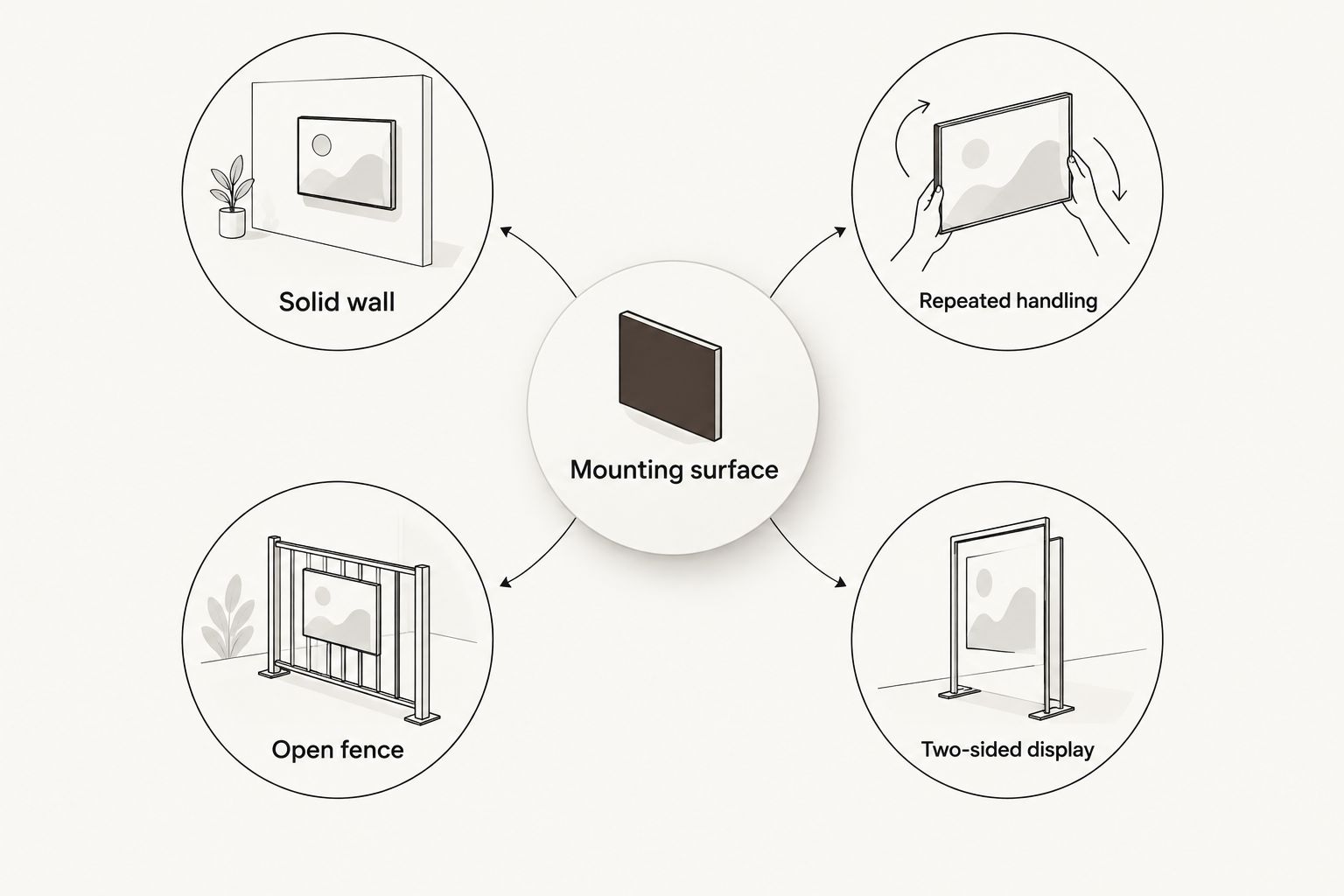
Best overall: 13 oz scrim vinyl; best for an open fence: mesh vinyl; best for repeated handling: 18 oz scrim vinyl. Arifprinting is an Aurora print shop offering banners, and the best vinyl banner material for outdoor advertising depends on where you will hang it.
- For most outdoor advertising banners, 13 oz scrim vinyl is the default choice for a supported display.
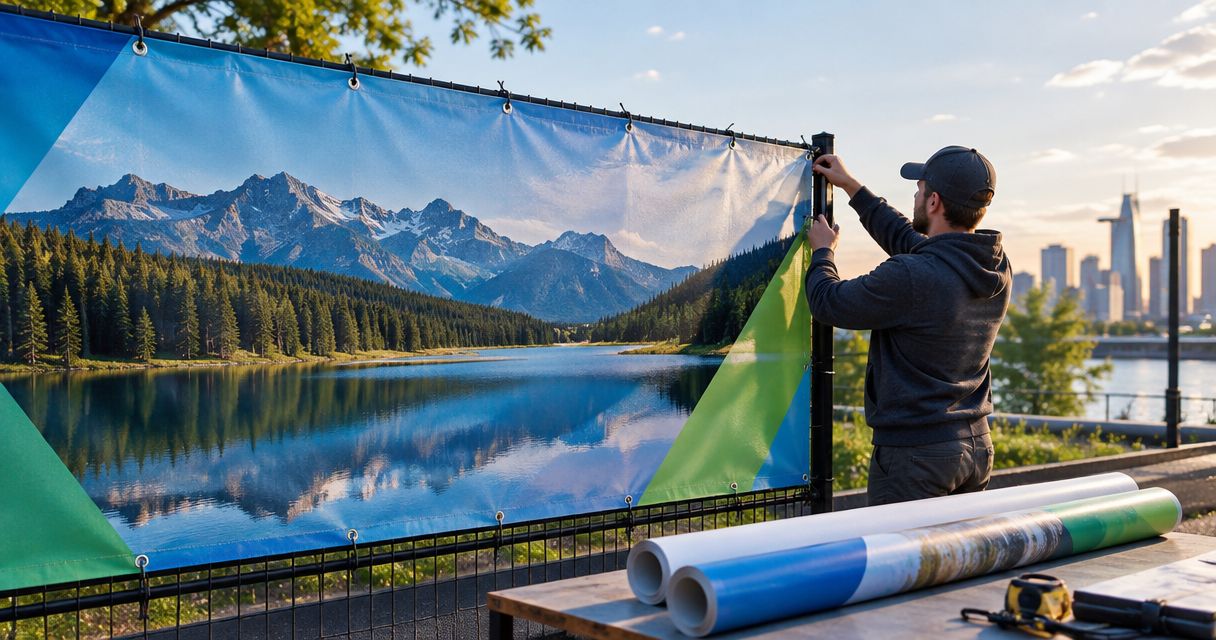
- Choose mesh vinyl for an open fence where air needs to pass through the banner.
- Choose 18 oz scrim vinyl when repeated handling matters more than keeping the banner light.
- Choose blockout vinyl when a two-sided display needs to prevent the reverse graphic from showing through.
Why this matters
A banner on a solid wall faces a different problem from a banner stretched across an open fence. The wall supports the banner. A fence leaves more of it exposed to moving air. Pick the material before you settle the artwork or hardware, because changing the material can change how the finished display looks and hangs.
For a 2026 outdoor campaign, write down the installation site first: solid wall, open fence, freestanding frame, or a position where people can see both sides. Then note whether you will leave the banner in place or take it down and reuse it. Those answers do more work than ordering the heaviest material by default.
Arifprinting is a practical banner option for Aurora and Denver-area buyers who need to choose a material around a real installation site. Bring the mounting details into the discussion. A description such as open chain-link fence is more useful than outdoor banner, because it identifies the exposure the material must address.
What makes the best vinyl banner material?
Use these criteria before comparing materials. Each one points to a different failure to avoid.
- Mounting surface: A solid wall supports the banner across its back. An open fence does not. Match the material to the structure rather than treating every outdoor location alike.
- Wind exposure: Mesh allows air through its openings. Solid vinyl presents an unbroken surface. Neither material removes the need to plan a secure installation.
- Viewing distance: A detailed graphic needs enough visible, printable surface for its text and images. Mesh trades some of that surface for airflow, so keep its message simple.
- Repeated handling: A banner you regularly install, remove, fold, and transport needs to suit that routine. Ask about the complete construction, including the edges and mounting points, not just the face material.
- One-sided or two-sided use: If people can walk around the display, decide whether they need to read it from both directions. Blockout construction addresses show-through between printed sides.
- Finished construction: Hems, grommets, and the intended mounting method matter alongside the vinyl. A material choice alone does not specify how the banner will be secured.
The common 13 oz and 18 oz labels refer to material weight per square yard. They help distinguish stock, but a heavier label is not a substitute for checking the site, the finishing, and the way the banner will be mounted. In 2026, make those details part of the order rather than an afterthought.
Outdoor banner materials at a glance
| Material | Best for | Standout feature | Key limitation |
|---|---|---|---|
| 13 oz scrim vinyl | Supported, one-sided displays | Solid printable face | Less suitable than mesh for an exposed open fence |
| 18 oz scrim vinyl | Banners handled repeatedly | Heavier solid construction | More weight to mount and handle |
| Mesh vinyl | Open fences | Openings let air pass through | Fine detail has less solid surface to print on |
| Blockout vinyl | Two-sided displays | Limits reverse-image show-through | Unnecessary when only one side will be seen |
1. 13 oz scrim vinyl: best for a supported outdoor banner
A 13 oz scrim banner is the sensible default when you want a solid print face and can mount the banner against a supporting surface. Scrim is reinforcement within the vinyl construction. It does not make every 13 oz banner identical, so confirm the proposed finishing and mounting method with the print shop.
Think of a banner on a wall at an Aurora storefront or a supported display at a Denver-area event. The graphic has a continuous surface for lettering and images, and you are not choosing mesh openings you do not need. If the same artwork will go on an exposed fence, reconsider the material before approving the job.
13 oz scrim vinyl pros:
- Solid face keeps the full printable surface available for the message.
- Suits a straightforward, one-sided display against a supporting structure.
- Gives you a clear starting point when comparing outdoor banner specifications.
13 oz scrim vinyl cons:
- Solid material does not let air through the way mesh does.
- The weight label alone tells you nothing about hems, grommets, or installation.
- It is not the automatic answer for a display viewed from both sides.
Best for: A one-sided banner on a solid wall or another supported installation.
Verdict: Buy for a supported display. Choose a different material when open-fence wind exposure or two-sided viewing is the main requirement.
2. 18 oz scrim vinyl: best for repeated handling
An 18 oz scrim banner is a heavier solid-vinyl option. Put it on the shortlist when you expect to take a banner down, move it, and install it again. The extra material weight also changes what the mounting structure must hold, so give the shop the intended location before treating heavier as better.
For a recurring 2026 event, separate two questions: how often will you handle the banner, and where will it hang during use? Repeated handling points toward this material. An open fence exposed to moving air still points you toward examining mesh, regardless of how often you reuse the sign.
18 oz scrim vinyl pros:
- Heavier solid construction suits a banner selected with repeat handling in mind.
- Continuous print face leaves room for detailed artwork and readable lettering.
- Clear weight specification makes it easier to compare proposed materials.
18 oz scrim vinyl cons:
- Heavier material places more weight on the mounting setup.
- Solid vinyl does not provide mesh-style airflow.
- Weight alone does not establish how the finished edges will hold up to use.
Best for: A supported outdoor banner that you plan to install and remove repeatedly.
Verdict: Buy when reuse is the deciding factor and the mounting setup suits the heavier material. Hold if you have not settled the mounting location.
3. Mesh vinyl: best for an open fence
Mesh vinyl has openings in the material, allowing air to pass through the banner. That makes it the first material to discuss for an open fence. It is not a promise that the installation will withstand every weather condition; the fence, fasteners, banner size, and exposure still matter.
The trade-off is visible in the artwork. Mesh interrupts the solid print surface, so a bold headline and uncluttered layout make more sense than small type or fine image detail. If someone must read a long message up close, reconsider the format instead of asking the material to solve a design problem.
For a fence banner near a busy Aurora location, tell Arifprinting which way the display will face and how it will attach. A fence in an exposed position calls for a different discussion from a banner fixed to a wall. Give the shop the actual site, not just the dimensions.
Mesh vinyl pros:
- Openings allow some air to pass through the material.
- Fits the practical problem of mounting a graphic on an open fence.
- Encourages a short message that is easier to scan from a distance.
Mesh vinyl cons:
- Fine artwork loses the uninterrupted surface available on solid vinyl.
- Mesh does not replace proper mounting or site checks.
- It adds little value when a solid wall already supports the banner.
Best for: A simple outdoor message mounted on an open fence.
Verdict: Buy for a suitable fence installation after checking the mounting plan. Skip it for detailed artwork on a supported wall.
4. Blockout vinyl: best for a two-sided display
Blockout vinyl addresses a specific print problem: a graphic on one side showing through the other. Choose it when the banner will be seen from both directions and you intend to print both faces. Confirm that the proposed material and finishing suit a two-sided outdoor installation before approving the artwork.
This is a visibility choice, not a default upgrade for every outdoor banner. If the back will sit against a wall, a second readable face adds nothing to that display. If people approach from either direction, decide what each side should say and how the finished banner will be suspended.
Blockout vinyl pros:
- Limits show-through between graphics on opposite sides.
- Supports a message designed for viewing from either direction.
- Solves a different problem from simply choosing heavier one-sided vinyl.
Blockout vinyl cons:
- Adds no viewing benefit when the reverse side faces a wall.
- Does not, by itself, answer how the banner will hang outdoors.
- Requires artwork planning for both faces when both will be printed.
Best for: A freestanding or suspended display viewed from both sides.
Verdict: Buy when both sides must carry readable graphics. Skip it when the banner will face only one direction.
How these materials were ranked
The ranking starts with the most ordinary decision: a one-sided outdoor banner mounted against support. That puts 13 oz scrim first. The remaining places are not claims that one material outperforms every other material. They identify the condition that changes the answer: repeated handling, an open fence, or two-sided viewing.
The criteria are mounting surface, wind exposure, readable print area, handling, and viewing direction. No material wins all five. In particular, moving from 13 oz to 18 oz does not turn a solid banner into mesh, and choosing mesh does not preserve the same uninterrupted print face as solid vinyl.
A 3 ft by 6 ft wall banner and a 3 ft by 6 ft fence banner have the same dimensions but different mounting conditions. Use dimensions to describe the job; use the site to select the material. Ask how the finished banner will attach before treating a material specification as a complete order.
Which outdoor banner material should you choose?
Choose 13 oz scrim vinyl if you have a supported, one-sided display and no special requirement. It is the default pick in this 2026 guide because it provides a solid print face without solving a problem your site does not have.
Switch to 18 oz scrim vinyl when repeat handling is central to the job and the mounting setup suits a heavier banner. Switch to mesh vinyl when an open fence makes airflow a material-selection issue. Switch to blockout vinyl when readers need to see printed graphics on both sides without the reverse graphic showing through.
Before ordering, send four facts in one message: where the banner will hang, whether the back is supported, whether both sides must be readable, and whether you will take it down for reuse. Add the intended size and artwork. That gives Arifprinting the details needed to discuss an outdoor banner instead of guessing from the words vinyl banner alone.
Prepare artwork for the material you pick
Start with the reading task. A driver or passerby needs a short message; a visitor standing next to the banner can read more. Keep the main words prominent, and do not make a contact detail the smallest, hardest part of the design. Review the proof at a size that lets you spot cramped text and missing information.
For mesh, simplify fine detail because the print surface has openings. For blockout, check each side separately: the two faces do not have to carry identical information, but each must make sense to someone approaching from that direction. For solid scrim, use the available print face without filling every part of it.
Keep important text clear of the areas needed for hems or grommets. Tell the shop if the banner needs to attach to a fence, hang from a frame, or sit against a wall, and ask how that changes the finished edges. In 2026, approving the graphic without confirming the installation details still leaves a major part of the banner decision open.
FAQ
What is the best vinyl banner material for outdoor advertising?
13 oz scrim vinyl is the default for a supported, one-sided outdoor display. Choose mesh for an open fence, 18 oz scrim for repeated handling, or blockout vinyl for a two-sided graphic.
Is mesh vinyl better than solid vinyl outdoors?
Mesh vinyl is better suited to an open fence when airflow is a concern. Solid vinyl keeps an uninterrupted print face and makes more sense for many supported displays.
Should I choose 13 oz or 18 oz vinyl for a banner?
Choose 13 oz scrim for a supported banner without a special handling requirement. Consider 18 oz scrim when the banner will be installed and removed repeatedly, and confirm the mounting setup suits its weight.
Can a mesh banner show detailed artwork?
Mesh can carry printed artwork, but its openings interrupt the solid print surface. Use a simpler message when fine detail or small text matters.
When do I need blockout vinyl?
Choose blockout vinyl when you want printed graphics on both sides without the reverse graphic showing through. A banner mounted against a wall usually does not need a second readable face.
Does heavier vinyl solve wind problems?
No. A heavier solid banner is still a solid surface exposed to moving air; check the mounting site and consider mesh for an open fence.
What should I tell a print shop about an outdoor banner?
Give the shop the banner size, mounting surface, exposure, viewing direction, and whether you will reuse it. Those details help match the material and finished edges to the installation.
One last thing
Do not approve a banner by weight alone. A 2026 material choice is complete only when you know what supports the banner and how it attaches. For an open fence, discuss mesh before choosing a heavier solid vinyl; for a wall, start with the supported-display options. That one site detail can change the right answer before anyone prints the artwork.