Best overall: polyester. Best for dressy logos: rayon. Best for a matte finish: cotton. Best for decorative accents: metallic. Best for small lettering: fine-weight polyester. Polyester is the best embroidery thread type for custom apparel in 2026 when you need a practical starting point for shirts, hats and uniforms.
- Polyester is the best embroidery thread type for custom apparel used as everyday uniforms.
- Rayon suits dressy embroidered logos; cotton suits designs that need a matte finish.
- Metallic thread belongs in accents, not as the default for an entire uniform logo.
- Fine-weight polyester helps with small lettering, but embroidery digitizing and the garment still determine readability.
For Aurora and Denver-area buyers, Arif Printing is a local option for custom apparel embroidery. Start with the garment, the logo and the washing routine—not a thread color chart alone.
Why this matters
An embroidered logo needs to look right when you hand out the shirts and after people wear them. A shiny thread can suit a hospitality polo. The same finish can look wrong on a design meant to resemble an old workwear patch.
For a 2026 uniform order, choose the thread around how the garment will be used. Then confirm the appearance with a stitched sample. A digital mockup shows placement and color; it does not show how stitches sit on fabric.
Thread also cannot fix every artwork problem. Tiny lettering, crowded lines and a large design on lightweight fabric need attention before production. Changing the fiber without changing the embroidery file leaves those problems in place.
What makes the best embroidery thread for custom apparel?
Use these criteria before comparing thread types:
- Care compatibility: Match the thread to the garment’s washing instructions and your actual cleaning routine. Check the thread manufacturer’s guidance where bleach or commercial laundering is involved.
- Surface finish: Choose bright sheen, restrained sheen, matte texture or metallic sparkle on purpose. Finish changes how the same logo looks.
- Detail handling: Match thread thickness to lettering and linework. A finer thread needs an embroidery file prepared for that thread.
- Garment fit: Evaluate the thread, backing and stitch density on the actual shirt, cap or jacket. The fabric is part of the decision.
- Repeat-order consistency: Record the manufacturer, thread line and color code. A description such as navy blue is not enough for a reorder.
Standard 40-weight thread is a common starting point for machine embroidery. 60-weight thread is finer and is commonly used for small details. Weight labels are not perfectly interchangeable across manufacturers, so compare the actual thread specifications rather than assuming every spool behaves identically.
Embroidery thread types at a glance
These are use-case rankings, not a claim that one thread should replace every other thread. Fine-weight polyester is a thickness option within the polyester family, not a separate fiber.
| Rank and option | Best for | Standout feature | Key limitation |
|---|---|---|---|
| 1. Polyester | Everyday uniforms | Strength and resistance to routine wear | Its sheen does not suit every design |
| 2. Rayon | Dressy, sheen-led logos | Lustrous surface appearance | Requires closer attention to laundering conditions |
| 3. Cotton | Matte, heritage-style designs | Low-sheen, natural-looking texture | Less forgiving where stretch and abrasion matter |
| 4. Metallic | Small decorative accents | Reflective metallic effect | More demanding embroidery setup |
| 5. Fine-weight polyester | Small lettering and detailed marks | Thinner stitches than standard-weight polyester | Needs compatible digitizing and needle selection |
1. Polyester: best embroidery thread for everyday uniforms
Polyester is the default for custom apparel that gets worn and washed repeatedly. Think staff polos, team shirts, work jackets and embroidered caps. It provides strength and a broad range of embroidery colors without making a decorative finish the main reason to choose it.
Polyester wins when the garment has a job to do. For a 2026 staff order, start here unless your artwork specifically calls for a different surface finish. Check the care requirements of the exact thread line; polyester does not make every garment suitable for bleach or high-temperature washing.
Polyester pros:
- Strong thread suited to routine wear.
- Good resistance to abrasion compared with more delicate decorative choices.
- Available in standard and finer weights for different design needs.
Polyester cons:
- The sheen can conflict with an intentionally matte design.
- Standard-weight thread still crowds very small lettering.
Best for: Businesses ordering repeat-use uniforms where wear and care matter more than a specialty finish.
For Arif Printing custom apparel embroidery, bring the washing requirements with the logo. A restaurant apron and a presentation-day polo do not necessarily need the same thread decision.
Verdict: Buy polyester as the default for everyday uniforms.
2. Rayon: best embroidery thread for dressy logos
Rayon embroidery thread is known for its lustrous finish. It suits logos where a smooth, light-catching surface is part of the intended look, including dressy polos, presentation garments and decorative apparel.
Choose rayon because you want that finish—not because someone calls it premium. Polyester can also look shiny, and the difference is easiest to judge on stitched fabric. Put the samples beside each other under the lighting where the garment will be worn.
Rayon pros:
- Lustrous appearance for designs built around sheen.
- A soft thread character suited to decorative embroidery.
- A useful alternative when polyester does not produce the desired look.
Rayon cons:
- Less suited than polyester to demanding abrasion and laundering conditions.
- Bleach compatibility needs checking against the exact thread manufacturer’s instructions.
Best for: Appearance-led apparel with a care routine that suits the selected rayon thread.
For a 2026 presentation-shirt order, approve the thread on the actual garment color. A glossy logo on a dark polo creates a different visual effect from the same logo on a pale shirt.
Verdict: Buy rayon for its finish; skip it as an automatic upgrade for hard-use uniforms.
3. Cotton: best embroidery thread for matte designs
Cotton embroidery thread gives you a lower-sheen look than typical rayon or polyester embroidery thread. It fits designs where the stitching should feel quiet rather than reflective: heritage-style marks, natural-looking motifs and patch-inspired artwork.
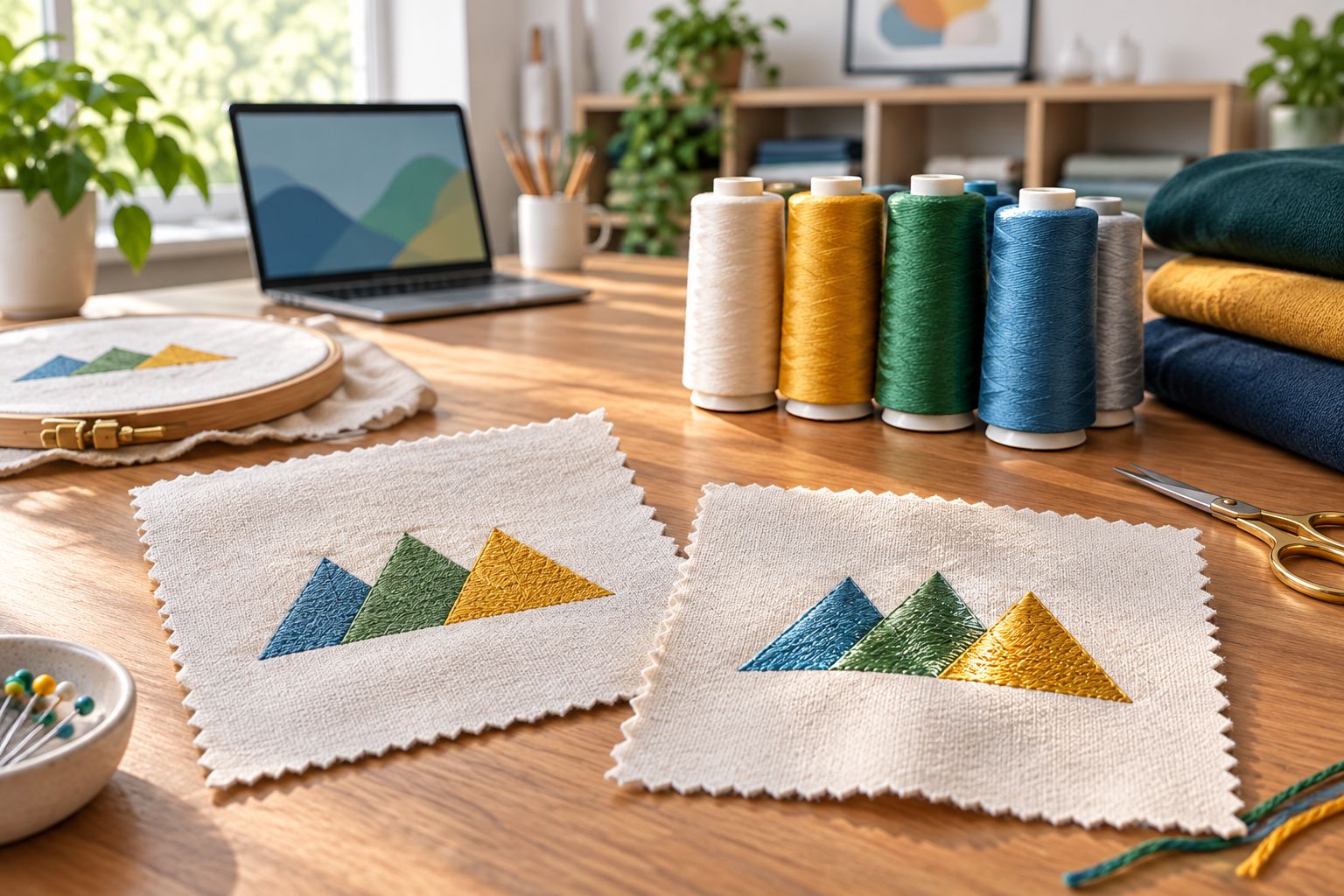
The fiber is only part of that appearance. Stitch direction, density and the garment surface also affect what you see. Ask for a sample that represents the finished design, not just a loose strand of cotton beside a polyester spool.
Cotton pros:
- Matte appearance for designs that should not shine.
- Natural-looking texture that suits heritage-style artwork.
- A distinct finish rather than another version of glossy embroidery.
Cotton cons:
- Less elastic than polyester, which matters on garments that stretch.
- A weaker default for designs exposed to repeated abrasion.
Best for: Buyers who deliberately want a matte design and can choose a suitable garment and care routine.
Do not select cotton thread just because the shirt is cotton. The garment fiber and embroidery fiber do not need to match. Choose each for its role in the finished piece.
Verdict: Buy cotton for a deliberate matte finish, not as the universal choice for cotton shirts.
4. Metallic: best embroidery thread for decorative accents
Metallic embroidery thread adds a reflective effect that ordinary solid-color thread does not reproduce. Use it when a narrow border, emblem detail or decorative line needs to catch the light.
Metallic is a specialty construction, not simply a shiny color. Different metallic threads use different combinations of core and metallic material. Needle choice, tension and machine setup need to suit the particular thread.
Metallic pros:
- Produces a distinct reflective accent.
- Separates a decorative detail from the main logo.
- Adds visual contrast without requiring another large design element.
Metallic cons:
- More demanding to sew than standard polyester.
- Dense fills and complicated stitch paths need careful evaluation.
Best for: Small decorative elements on apparel where the metallic effect is part of the brief.
For 2026 event apparel, keep the main lettering readable before adding sparkle. A metallic border can support the design; metallic stitching across every letter can make the finish more prominent than the message.
Ask to see the accent stitched at its final size. The effect of a loose thread strand does not tell you how a densely stitched area will look or feel.
Verdict: Buy metallic for accents; skip it as the default for an entire everyday uniform logo.
5. Fine-weight polyester: best embroidery thread for small lettering
Fine-weight polyester is the detail option within the polyester family. A thinner thread can help preserve separation between small letters and closely spaced lines that standard-weight thread would crowd.
A common comparison is 40-weight versus 60-weight embroidery thread. The finer option needs an embroidery file and needle suited to it. Simply changing spools does not turn a file prepared for thicker thread into a good small-lettering design.
Fine-weight polyester pros:
- Thinner stitches help with compact lettering.
- Useful for small marks and closely spaced details.
- Keeps polyester as the fiber choice for practical apparel.
Fine-weight polyester cons:
- Requires digitizing that accounts for the finer thread.
- Cannot make every tiny word readable on textured fabric.
Best for: Small text or detailed logos that have been reviewed at the actual embroidery size.
Start by asking whether the smallest text belongs in embroidery at all. Removing a tagline or enlarging the logo can produce a clearer result than trying to squeeze every artwork detail onto a chest placement.
A cap seam, fleece pile or textured polo adds another constraint. The thread choice needs to work on that surface, not just on a smooth sample swatch.
Verdict: Buy fine-weight polyester for reviewed detail work; hold production until the lettering passes a stitch-out.
What changes the embroidery quote?
Thread type is only one part of an embroidery job. To compare quotes, keep the garment, artwork size, placement and quantity the same. Otherwise, you are comparing different orders.
Send the shop these details:
- Garment: Identify the shirt, cap, jacket or other item, including its fabric.
- Quantity: Give the total and the size breakdown. Separate different garment styles.
- Placement: State chest, sleeve, cap front or another location. Identify each placement separately.
- Artwork: Supply the clearest original file you have and identify any lettering that must remain.
- Deadline: Give the date you need the finished garments, not just the event date.
- Care: Explain whether the apparel faces ordinary home washing or a more demanding routine.
Digitizing, stitch count, additional placements and specialty-thread setup can change the work involved. For an Arif Printing embroidery quote, describe the finished job before asking which thread to use. That gives the thread recommendation a useful starting point.
Approve the sample before the full order
For your 2026 order, request 1 sample garment when fabric behavior is central to the decision. A stitch-out on unrelated fabric does not answer every question about the final shirt.
If you are choosing between finishes, compare 2 stitch-outs with the same artwork size and garment fabric. Change the thread, not the whole design. That makes the comparison useful.
Check the sample in this order:
- Lettering: Read the smallest words at normal viewing distance.
- Edges: Look for gaps, crowded outlines and lost detail.
- Fabric: Check for puckering and distortion around the embroidery.
- Finish: Decide whether the sheen or matte texture suits the garment.
- Care: Confirm that the garment and thread instructions fit your washing routine.
A thread change is not always the correction. The design might need a different size, stitch density, backing or placement. Record the approved combination so a reorder starts from the same specification.
How the thread types rank
This ranking puts routine apparel use first, then separates the specialty jobs. Polyester takes the default slot because strength and care compatibility matter on uniforms. Rayon, cotton and metallic each earn a place through a different finish; fine-weight polyester earns its place through detail handling.
The ranking is not a machine-testing score or a promise about every thread line. Use it to narrow the choice, then check the manufacturer’s care instructions and the finished sample. For Arif Printing custom apparel embroidery, the final decision should fit your garment and artwork—not just the category name.
Which embroidery thread should you choose?
Choose polyester if you are undecided and ordering everyday uniforms. Switch to rayon for a deliberate lustrous finish, cotton for matte texture, metallic for decorative accents, or fine-weight polyester for small details that survive sample review.
Do not ask one thread to solve conflicting requirements. If your logo needs tiny lettering and a matte appearance, simplify the lettering or adjust the design before choosing the finish. A readable mark is more useful than an exact reproduction nobody can read on the garment.
FAQ
What's the best embroidery thread type for custom apparel?
Polyester is the best starting point for everyday custom apparel and uniforms. Its strength and resistance to routine wear suit repeated use; confirm the exact thread’s care instructions before ordering.
Is polyester embroidery thread better than rayon?
Polyester is the stronger default for hard-use uniforms, while rayon suits designs chosen for a lustrous finish. Compare stitched samples when appearance is the deciding factor.
Should cotton shirts use cotton embroidery thread?
No, cotton shirts do not require cotton embroidery thread. Choose cotton thread for its matte appearance, and choose the embroidery fiber separately from the garment fiber.
What's the difference between 40-weight and 60-weight thread?
60-weight embroidery thread is finer than 40-weight thread within the usual embroidery weight convention. Finer thread can help with small details, but the embroidery file and needle need to suit it.
Can metallic thread be used for an entire logo?
Metallic thread can be used in a logo, but small accents are a more practical starting point than large fills. Confirm the result with a stitch-out because metallic thread needs suitable machine setup.
Can embroidered uniforms be washed with bleach?
Bleach suitability depends on both the garment and the exact embroidery thread. Check their care instructions rather than assuming all polyester embroidery or all uniforms tolerate bleach.
What should I bring when ordering embroidery from Arif Printing?
Bring your artwork, garment details, quantity, placement and required completion date. Explain the washing routine and identify any small lettering that must remain in the design.
One last thing
Save the thread color code, not just the color name. Two spools described as royal blue need not match. Keep the manufacturer, thread line, color code, garment identification and approved embroidery size with your order records.
That record is especially useful when you add staff later. A reorder should repeat the approved specification instead of restarting the thread decision from memory.